Product News: Handmade Wooden Propellers
avatar

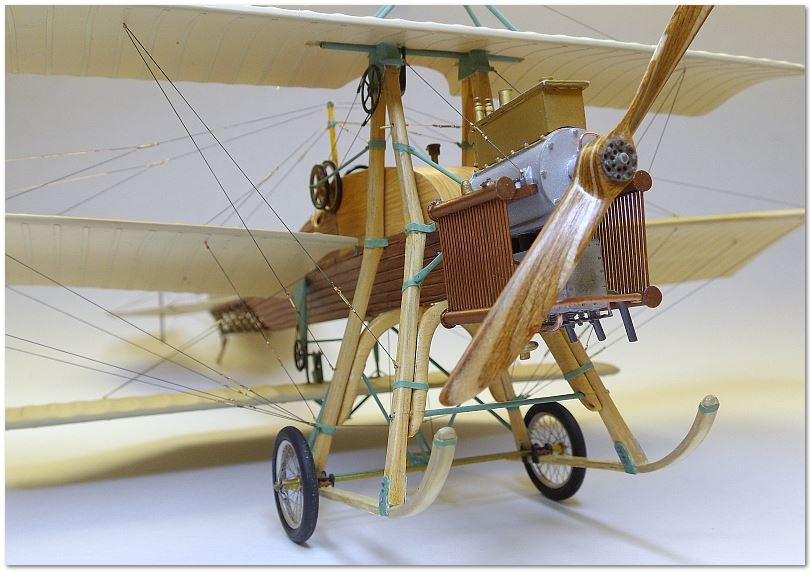
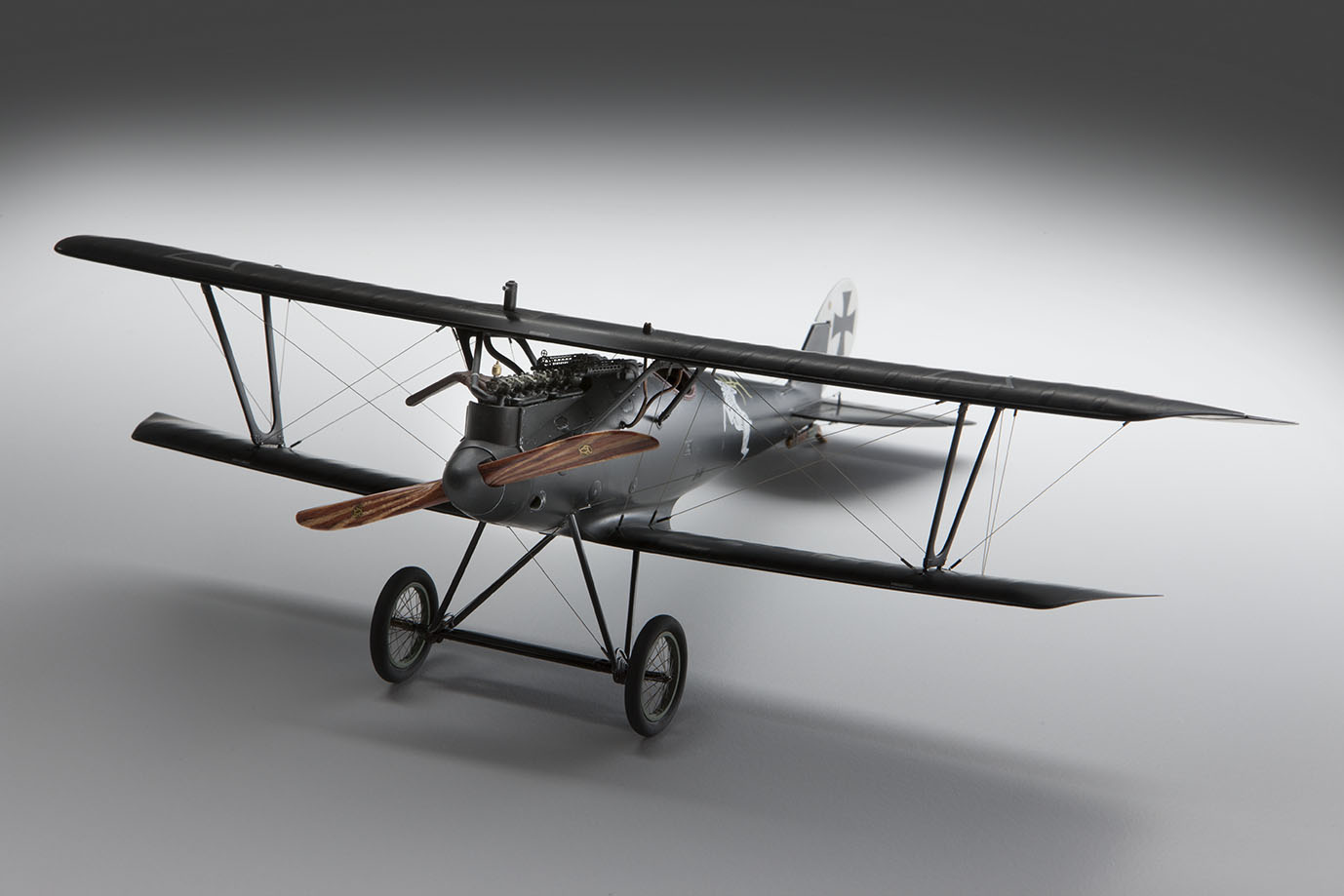
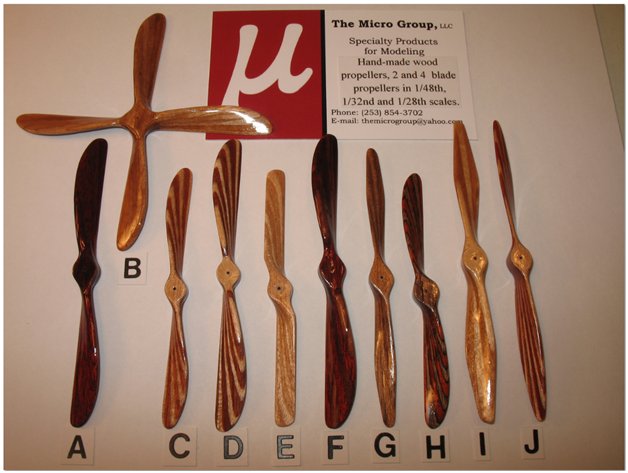
Micro Group propeller on Des Delatorre aircraftRecently, I read an Aeroscale review of some very high-quality, handmade wooden props produced by ‘The Micro Group, LLC’ company. They looked very impressive and so, being curious, I sent an email inquiry to Craig Rosner, the company proprietor. He sent back some materials showing examples his customers had used and additional specific information. Since his work had previously been unknown to me, I offered to put out some flyers at the National Convention to help ‘spread the word’ as well as posting to the club website. To that end, we’ll have notational ‘business cards’ for distribution, providing contact info and the link to this posting. The advantage is that folks can peruse and download the product information sheet (HERE) at their leisure while not using ‘paper’ to do so.IMG_0006

Additional resources exist on the web, as the propellers have been available to order for quite some time.  A nicely balanced product review by Robin Jenkins (a modeler who carves his own “airscrews” and hence eminently qualified to comment) can be found at the “Scale Plastic & Rail” website.  Robin highlights the challenges of making such propellers and the skill Craig exhibits in reproducing the complex contours involved.Image1

In addition to his propeller line, Craig makes what he calls ‘micro maritime art’ for sale to collectors. These are one-of-a-kind creations that are fantastic examples of the modeler’s art and all of maritime related subjects. To see some of these truly inspirational pieces, visit his website at: www.micromaritimeart.com  His work brings to my mind some of the models in the Crabtree collection – only much smaller and much more ‘alive’.

Posted in Reference, Reviews, Uncategorized

P4M-1 Martin Mercator: Kit Review & Build – Part 2
avatar

1:48 Scale Martin P4M Mercator by RCM (Robert’s/Combat Models)

Order via website: www.combatmodels.us
(kit 48-020 w/ resin detail set)  $59.95 plus shipping

Part 2:  After my initial impressions of the Combat Merc, I have decided I would just “go for it”.  I gathered up as many spare parts that seemed of likely use, including a spare set of Monogram B-17 wings (for the engine nacelles and airfoil sections), a bunch of spare Monogram B-24 parts plus a pile of Monogram P-61 interior parts (I found the 20mm cannon parts from the Widow were especially nice and ideal for the nose & tail gun turrets.)  I also had a spare set of True Details P-61 engine cowlings that looked good for the forward 3/4 of the Merc’s cowlings, with a bit of enhancement.  But, after scouring the spare parts bins, I found I really didn’t have much that was directly applicable to the project.

What I did find was what a treasure trove the Steve Ginter book really was; without all the specs and pictures it contains, I don’t think I could have even attempted the work necessary to make the model look like a Mercator.  So when I say it is indispensable, I mean it.

Example of one of the required "plugs" to stretch the fuselage to the correct length.

Example of one of the required “plugs” to stretch the fuselage to the correct length.

I found the station drawing was great for determining just where the fuselage elements were to be located.  It allowed me to see exactly where I needed to lengthen the fuselage to achieve the “long & lean” look of the real deal.  Turns out the kit is short about 1.5 scale feet (¾ inch) in length – but not from all in one spot. Hence, any ‘stretch’ would need to be spread across several points.

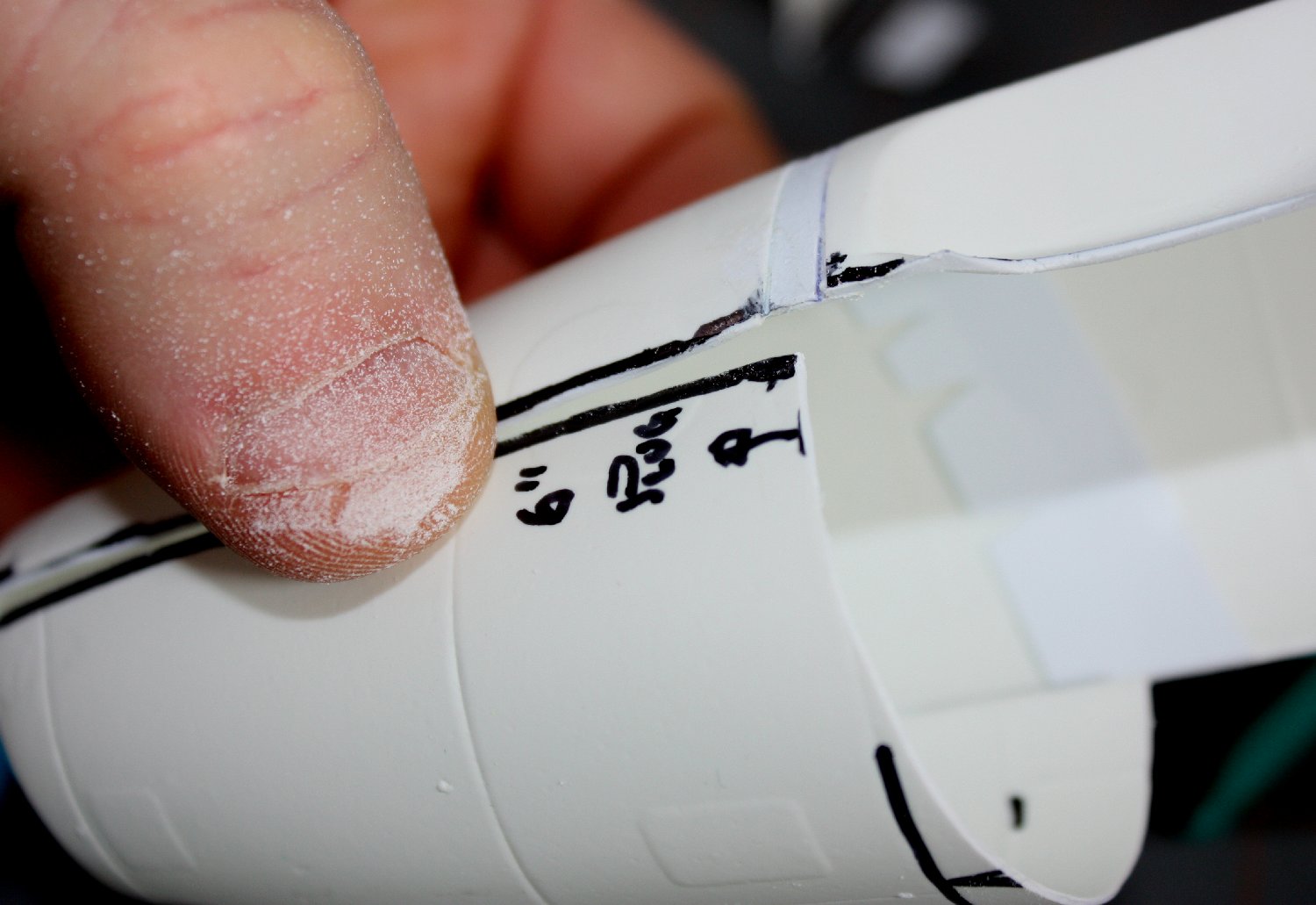
I started by cutting out the fuselage pieces.  I used my standard methodology (see Vac Aircraft Modeling, Part 4) using a Sharpie pen to outline the parts before carefully scoring around and snapping each piece free.  I focused on the fuselage first because of its known problems and because it would logically serve as an alignment reference for the rest of the assembly (wings, tails, etc.).

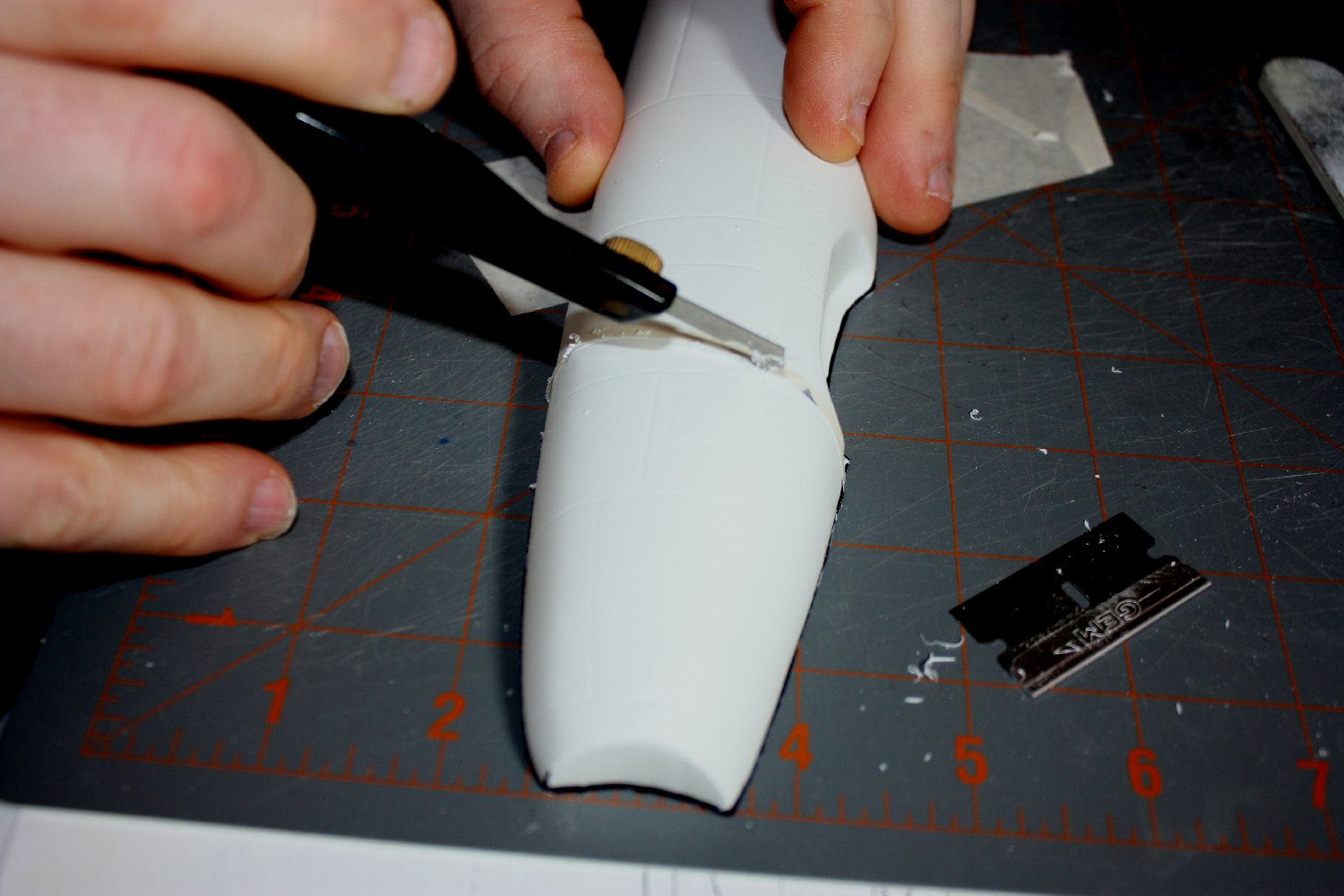
Scoring the fuselage at the separation line.

Scoring the fuselage at the separation line

Adding extra length to a fuselage can typically be done by working with an assembled fuselage (i.e, glue halves, then cut) or by doing each side separately.  I chose the latter method.

So, after removing the fuselage halves, I marked where I was to cut and add ‘plugs’ to get the correct length.  One was directly in front of the kit windshield location, along an angled panel line; the other was just aft of the cockpit opening. A third one would be fall just in front of the aft radome location.

To start, I used a pencil to mark the separation lines as precisely as possible on one fuselage half.

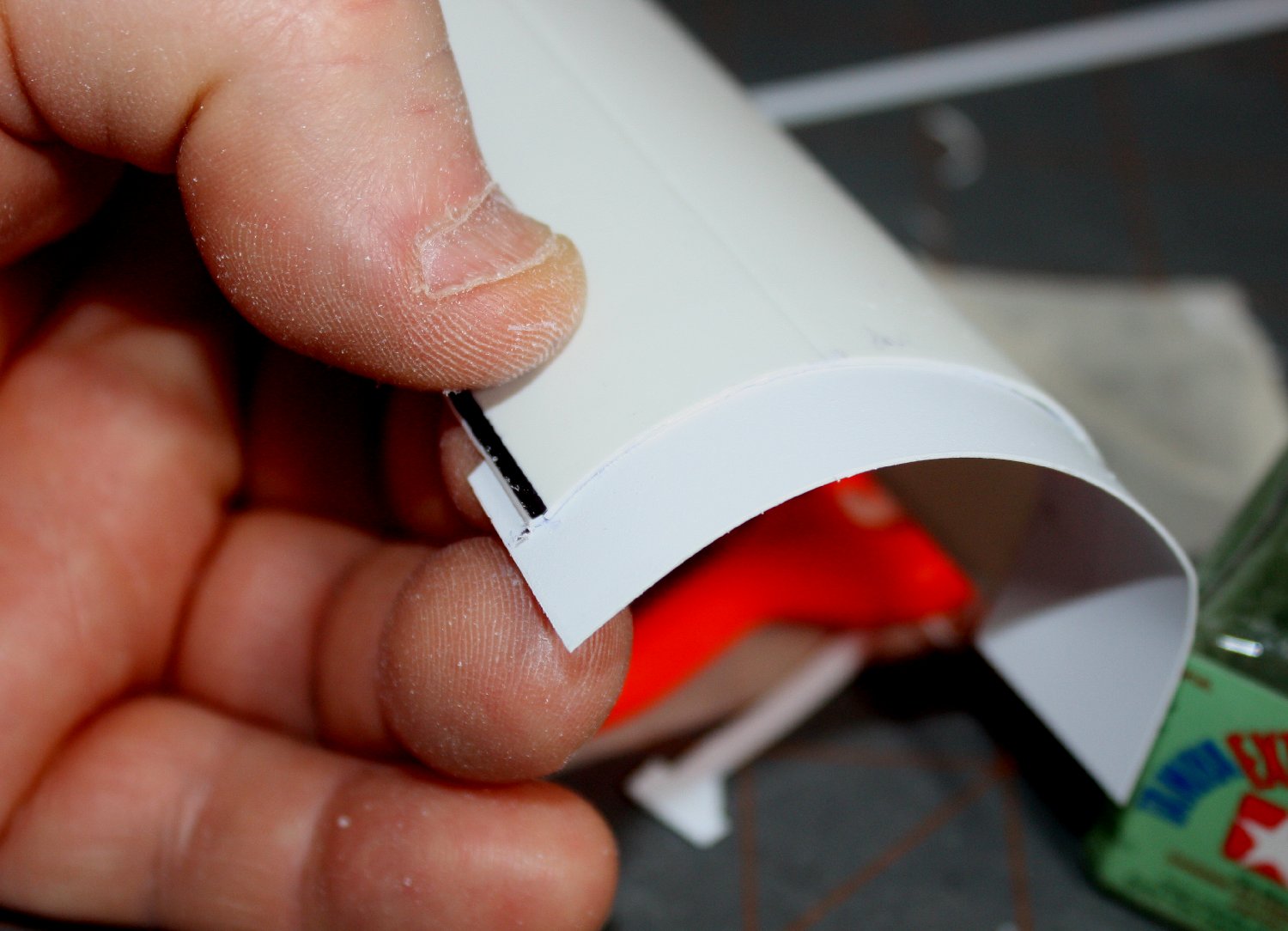
Backing strip being added to joint

Backing strip being added to joint

I carefully scribed the marked lines so they were distinct grooves, then finished cutting through using a single edged razor blade (which accurately tracked the scribed groove.)  Finally, I lightly sanded the cut edges to square them off.

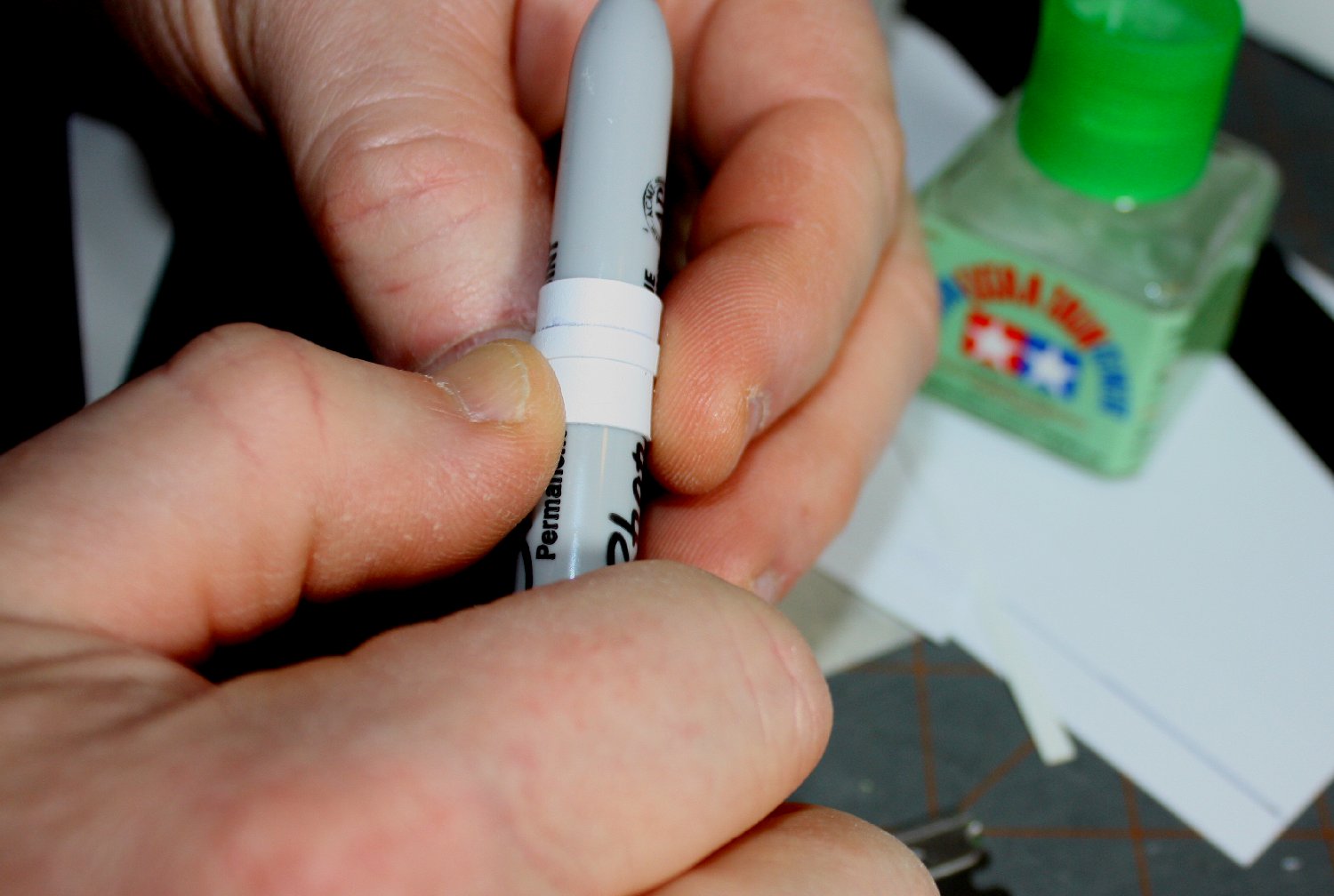
Curling the joint strips using a suitable cylinder (in this case a Sharpie pen)

Curling the joint strips using a suitable cylinder (in this case a Sharpie pen)

I made the cuts as straight & perpendicular to the centerline as I could.  Then I glued a roughly 5/8” strip of .010 sheet plastic sheet to the inside of one cut piece, using clamps to ensure a good bond.  (I also tried gluing two laminated strips together before applying to the joint, but this made the strips harder to bend to the fuselage contour.)

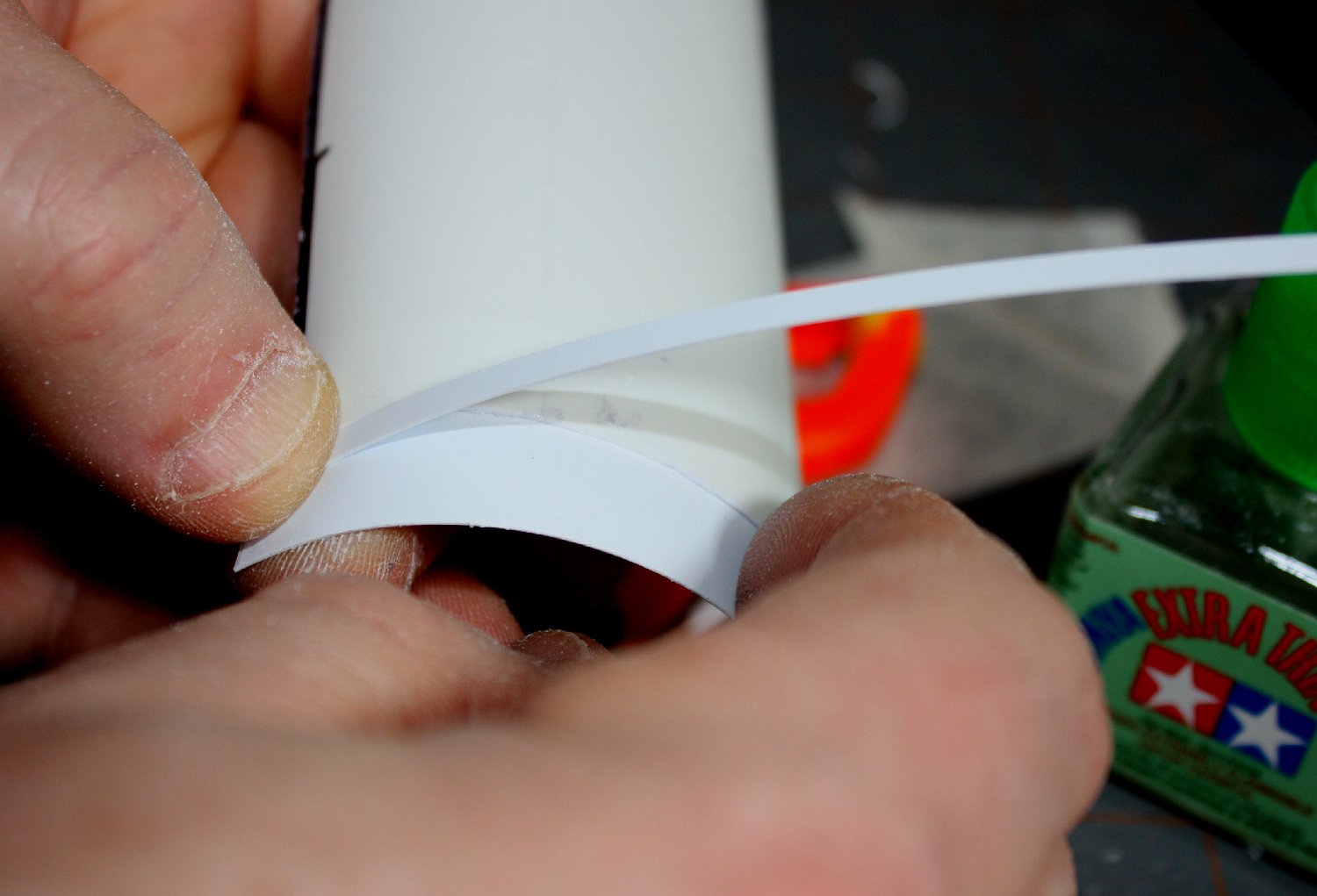
Second strip to 'fill the gap' & match the fuselage thickness

Second strip to ‘fill the gap’ & match the fuselage thickness

I had marked the “joint” strip with a straight line for alignment reference (avoids skewing the strip.)  Then I applied a constant width strip to the outside of the joint strip, which acted as a spacer for gluing the mating part in place.
A bit of pre-curling helped the plastic conform.

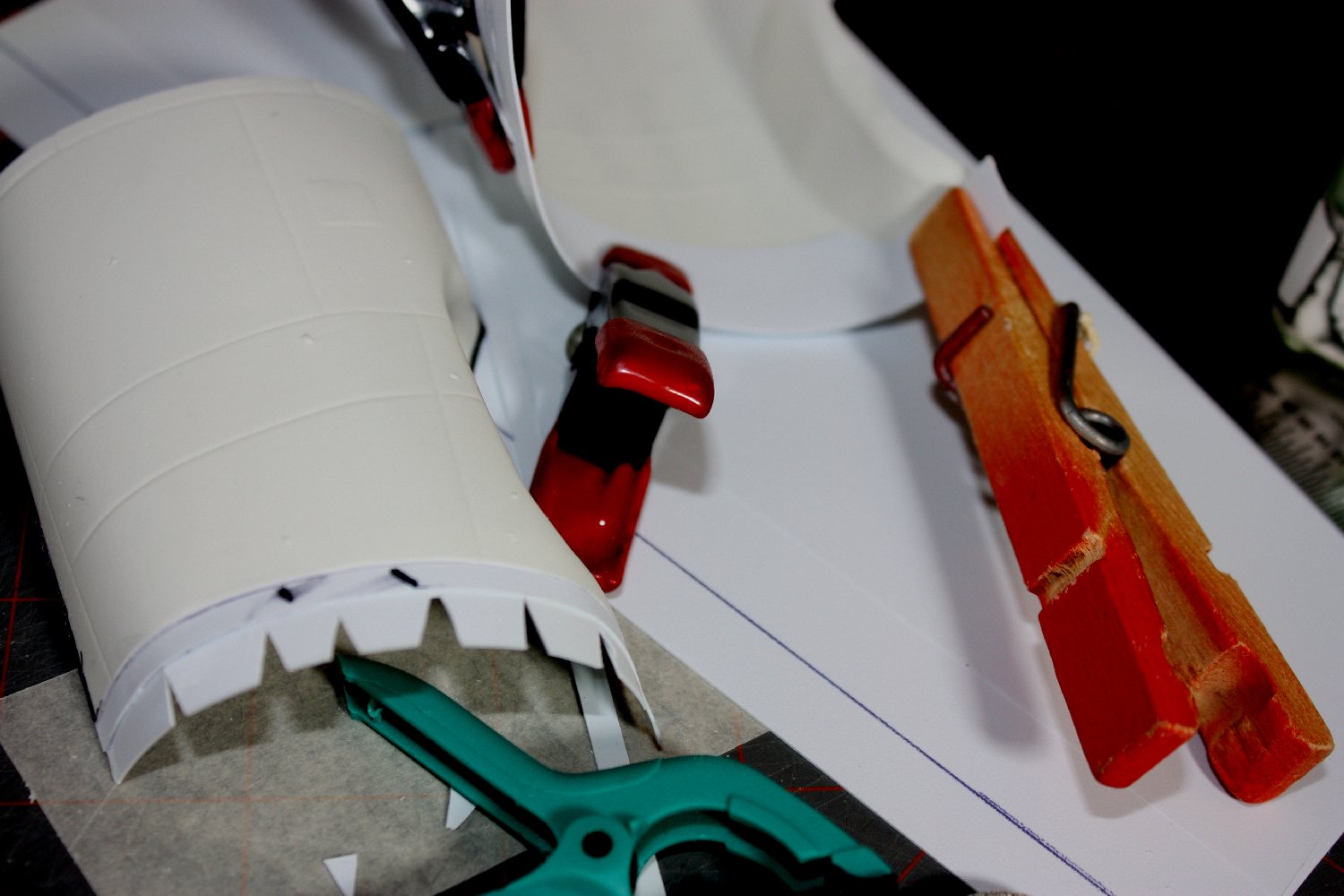
Clamping the glued joint stips; note the notched strip

Clamping the glued joint strips; note the notched strip

Where there was a taper involved, I used a paper modeling trick.  I cut V-shaped notches in the joint strip on the tapered side, which allows it be bent to a smaller cross section across the joint.

Once all the joints were set, I moved to correcting the aft fuselage contour, the cross-section of which was too oval & lacked the distinctive ‘flat-sided’ appearance of the real bird. I corrected this by brute-force flattening the aft fuselage adjacent to the tail gunner’s station after scoring a series of horizontal grooves on the inside.  I then simply cut two .20 plastic ‘panels’ and glued/clamped them to the interior to brace the new contour.

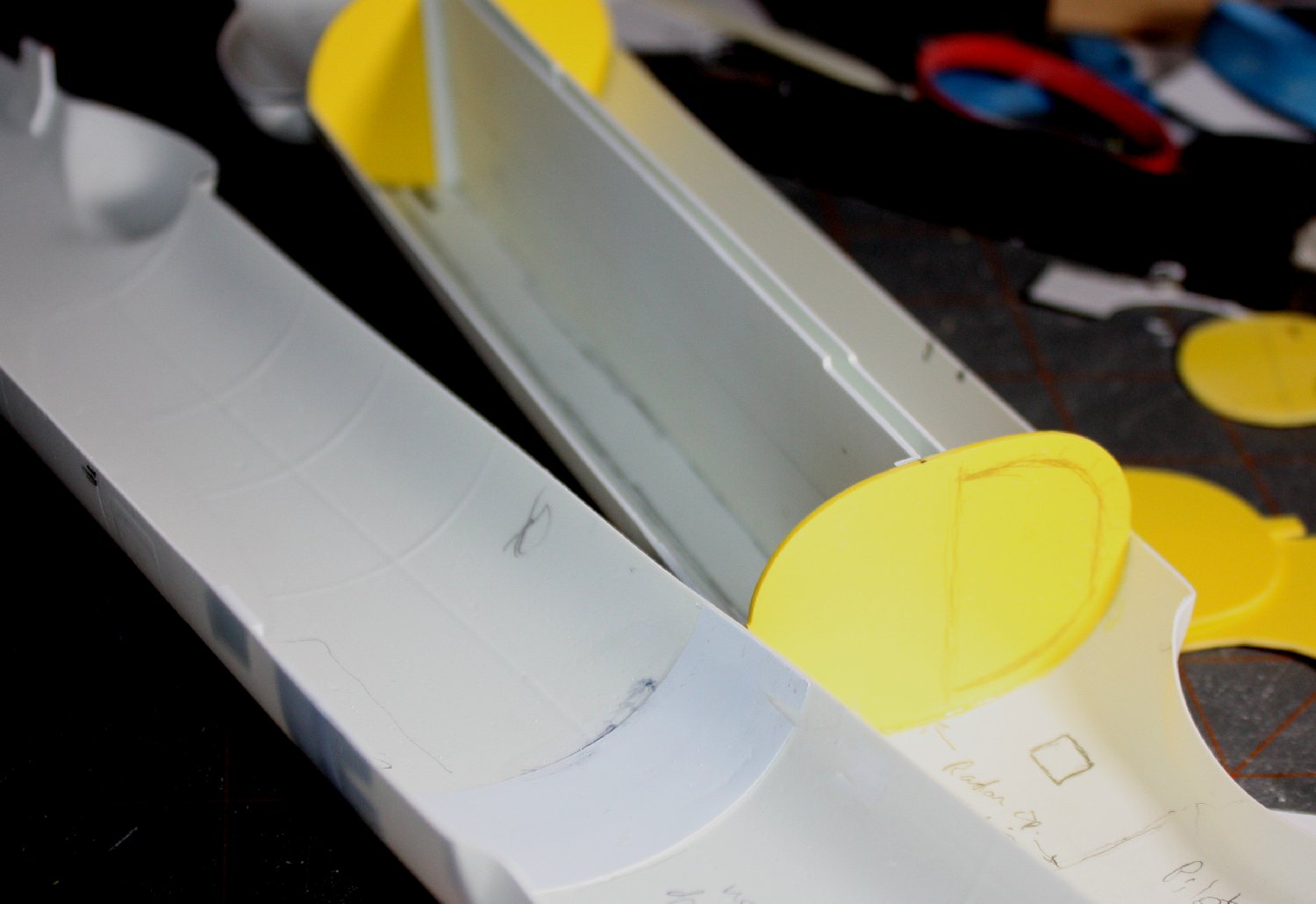
My next consideration was the big, ‘floppy’ fuselage halves needed some serious internal support.  I figured the best way to do this was to approximate elements of the original structure.  Using the provided plans, I took the cross sections as templates for the bulkheads I’d have to make. (Methods for creating internal bulkheads is discussed in Vac Aircraft Modeling, Part 5.)  Penciling in the locations of the bulkheads and floors in one fuselage half helped to define the required work.  Again, the frame station drawing helps immensely; the stations are numbered in inches from the forward ‘zero’ reference at the nose, so all that is needed is to measure backwards from that point in scale inches to any desired ‘fuselage station’.

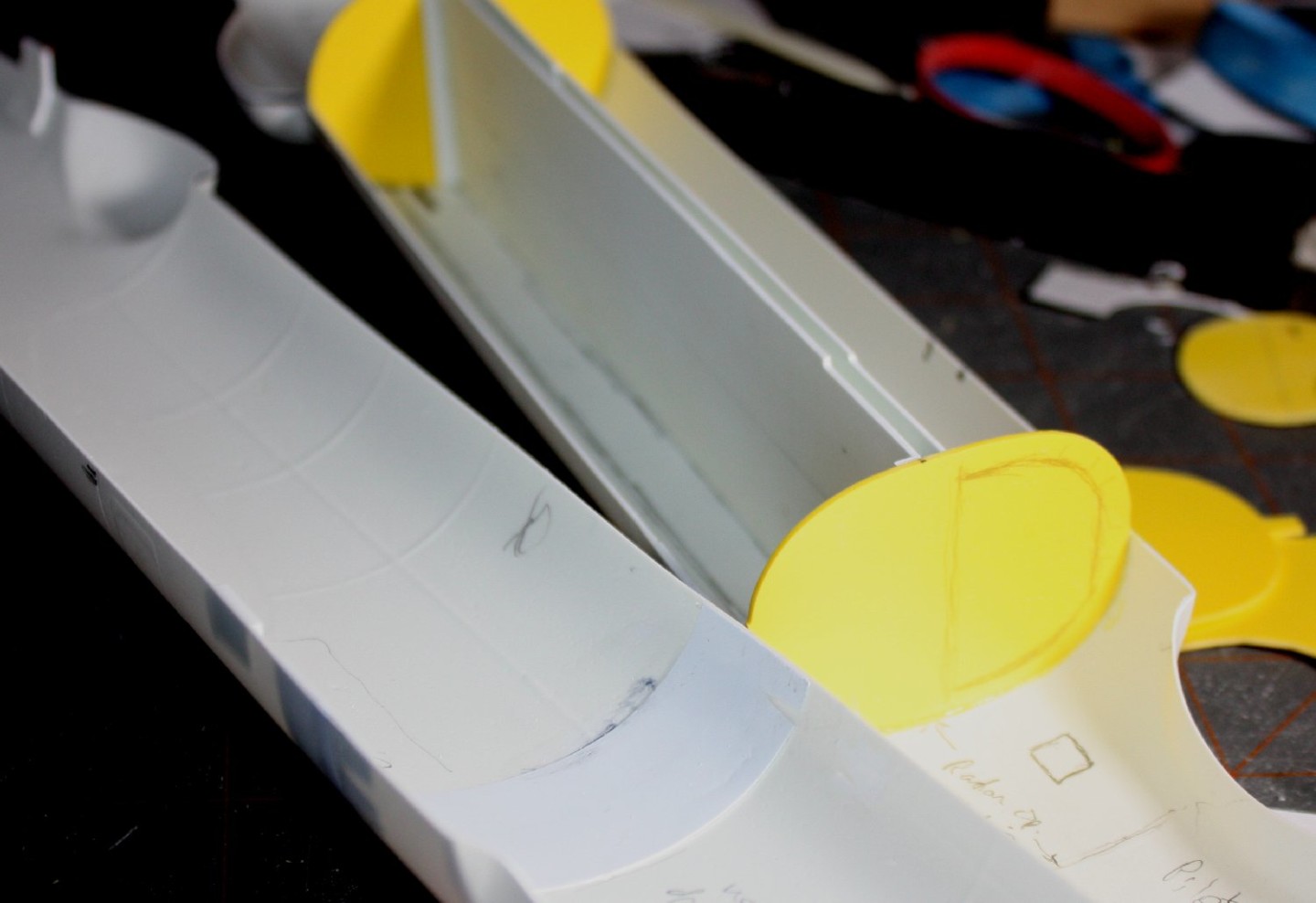
Bomb bay roof flanked by bulkheads; note marking for later bulkhead cut-out.

Bomb bay roof flanked by bulkheads; note marking for later bulkhead cut-out.

One thing about the Mercator is it is largely of constant cross section, so one template works for a lot of frames.  It is also symmetrical side to side, so each template can be done by tracing one half and then flipping it over the center-line for both sides.

<Go to Part 1
(to be Con’t)
Posted in Reviews | Tagged , , , | 2 Comments

Vacuform Aircraft Modeling – Part 5
avatar

Basic Techniques (Con’t)
Creating Bulkheads:

Being able to fabricate ‘bulkheads’ is a useful modeling skill and pretty much required when working with vac kits since they often need extra support and rigidity.  But, bulkheads are also needed when making up any interior compartments like cockpits, landing gear wells, bomb bays, etc.  Many a ‘popped seam’ has resulted from a lack of proper internal support – something that can afflict *any* model kit, vacuform or otherwise.
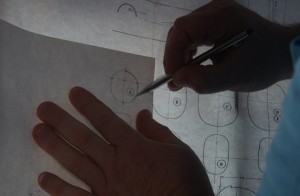
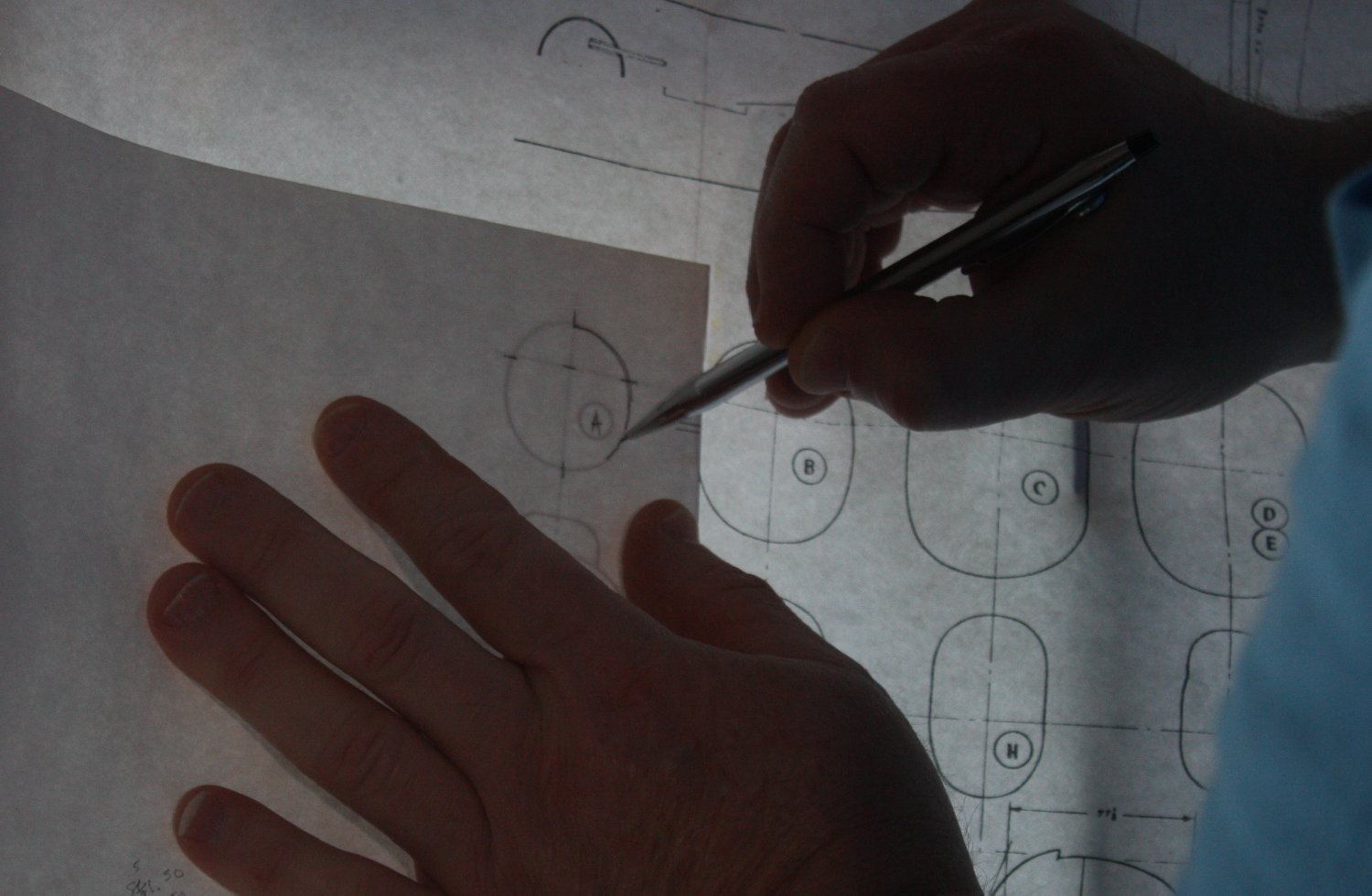
Tracing a pattern using a window as a backlight.

Tracing a pattern using a window as a backlight.

For the purpose of this discussion, the basic material used for bulkheads is sheet styrene plastic.  This can be the ‘waste’ backing sheet from a vacuform or sheet from other sources (one common brand being Evergreen.)  However, even stiff cardboard can be used to provide support & then further faced with thin plastic sheet & detailed if necessary.  Using the same plastic as the main parts simplifies bonding, but dissimilar materials can be used with CA (super-glue) or epoxy adhesives.

There are lots of ways to tackle a bulkhead; the primary challenge being to get a proper profile so there is good contact area with the inside surface.  In short, a precisely contoured bulkhead works better & is stronger than an poorly shaped piece, which could also induce unintended distortions.  To that end, checking and double checking the shape is best to avoid such problems – and never be afraid to start over.
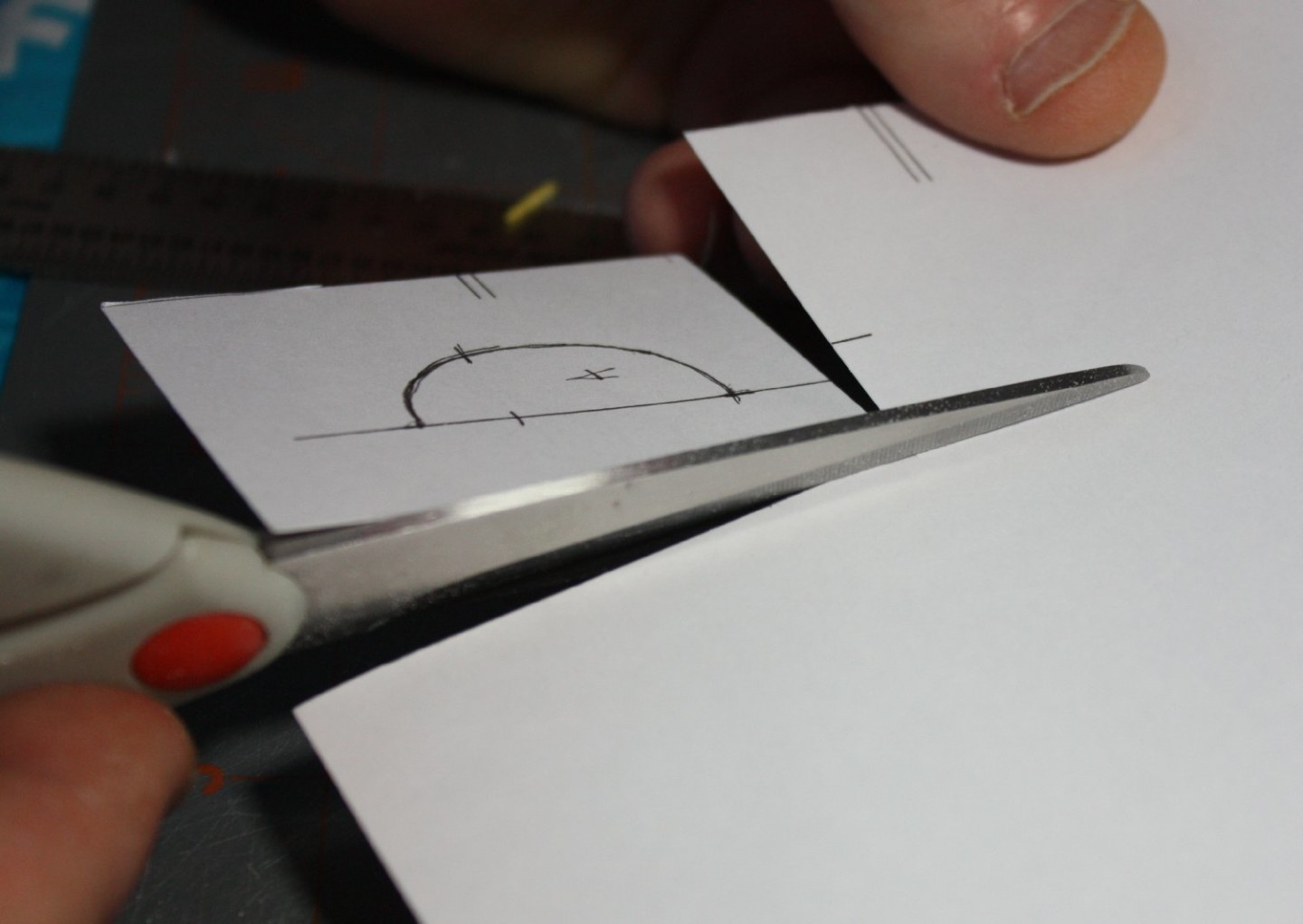
Cutting pattern from cardstock.  Note only one half is fully traced.
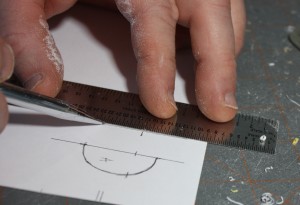
Cutting pattern from cardstock. Note only one half is fully traced.

Using full width mark to aid trimming excess material.

Using a full width mark to aid trimming excess material.

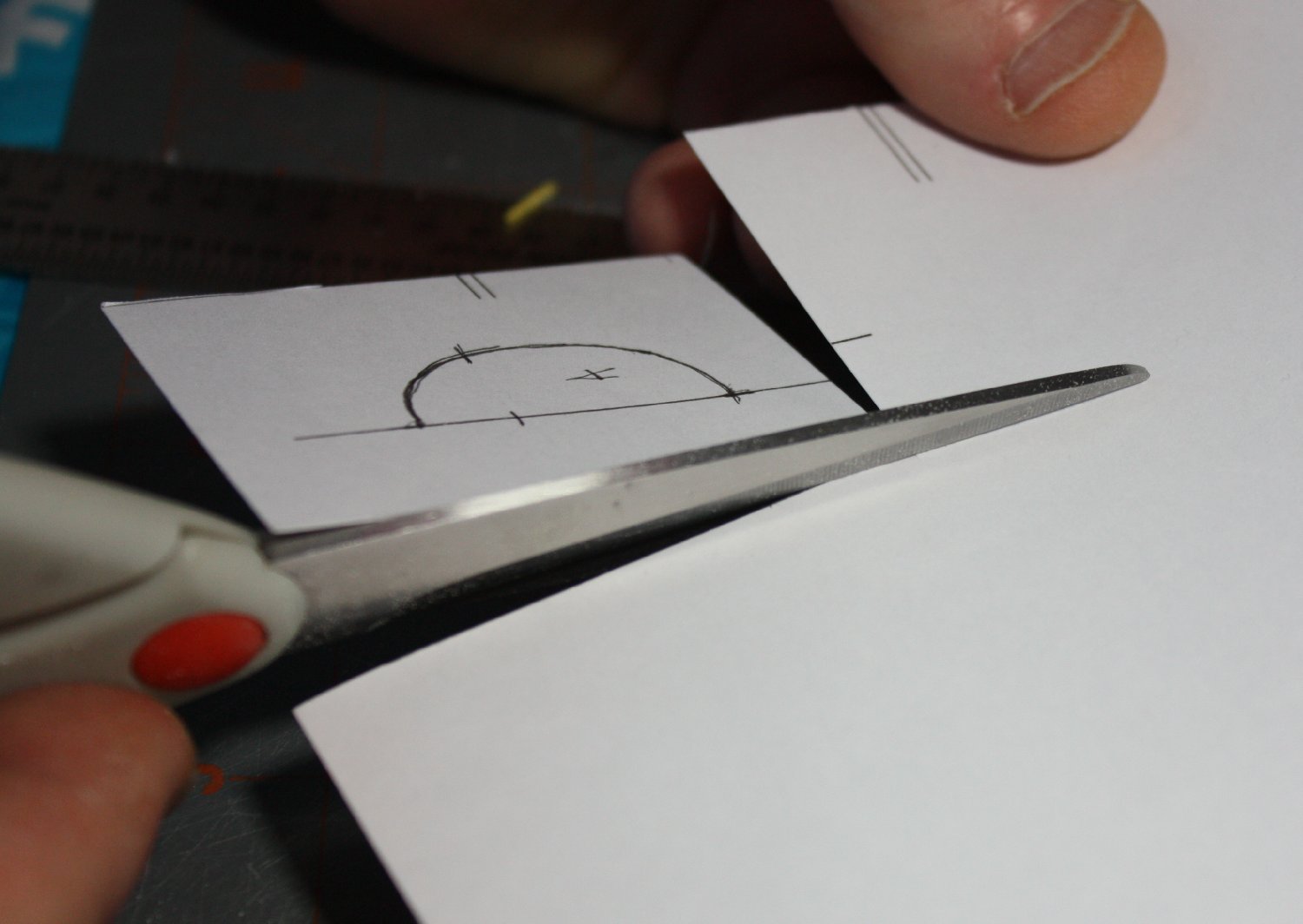
Fabrication starts with a rough pattern.  This may be made using a ‘contour gauge’, by ‘trial & error’ or by using the cross sections from a drawing.  The rough pattern is made using stiff paper card because it is easy to cut (or even sand) to adjust for a precise fit (plus, it is cheap compared to plastic sheet!)  Manila folder paper or similar card stock is ideal but avoid light pressed-paper cardboard (such as ‘cereal box’ material) because it is harder to cut and dulls blades quickly.  Once the rough pattern is adjusted for a perfect fit, it can be used as a template to cut the actual bulkhead from the plastic sheet.
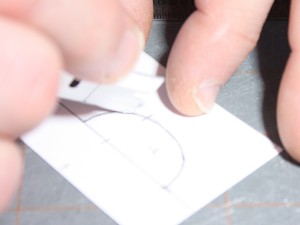
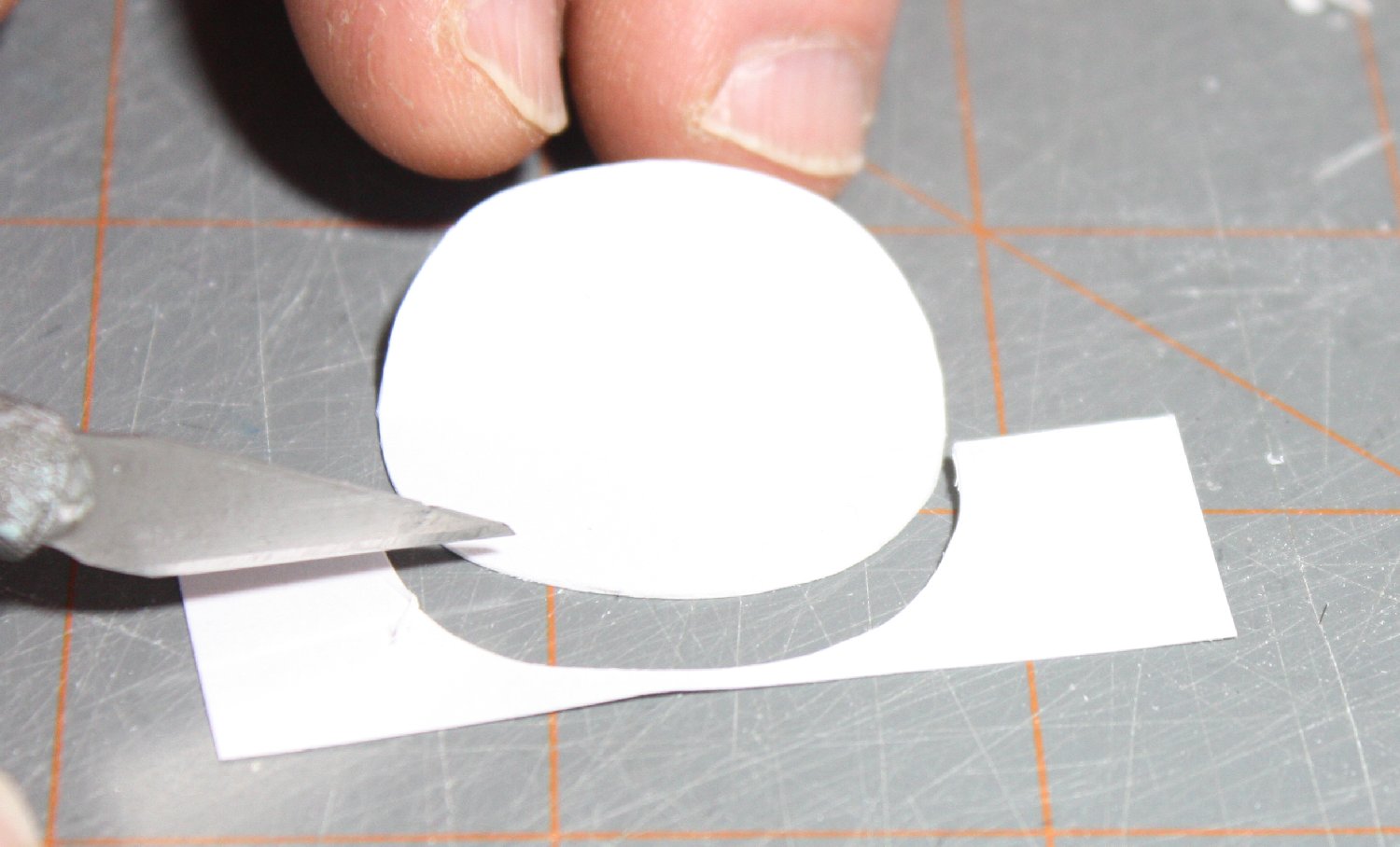
Sometimes a razor makes a cleaner curved cut.
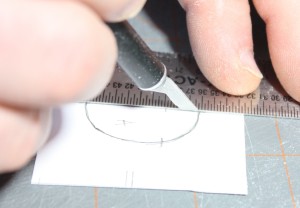
Sometimes a razor makes a cleaner curved cut.

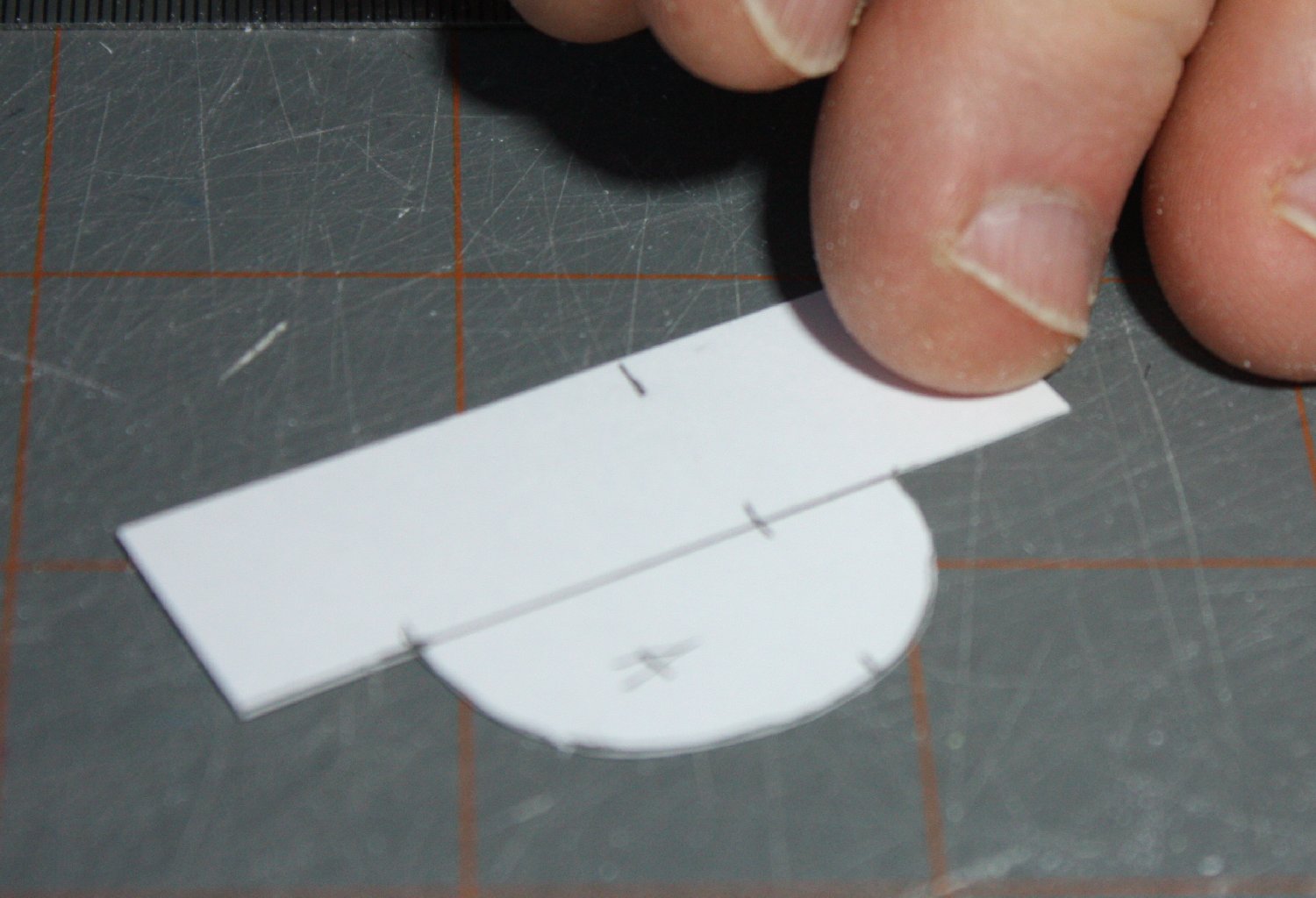
Scoring the center-line before folding over.

Scoring the center-line to aid folding over.

It is important to avoid distortion where the bulkhead is to go.  This is a particular problem with thin- walled vacuform parts, but any part can ‘flex’ when de-molded – even injection molded parts.  That is why taking bulkhead ‘measurements’ directly from the parts before removing from the backing is advised.  Since a contour gauge requires some stiffness to the part being measured, care is needed to control flex during this process.
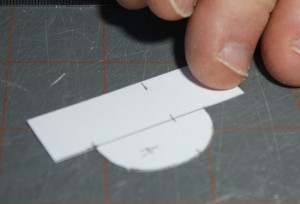
Resulting pattern before duplication of other half.
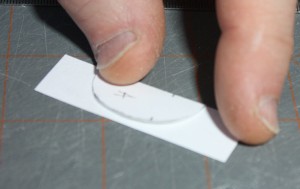
Resulting pattern before duplication of other half.

Scored center-line folds precisely over other side.

Scored center-line folds precisely over other side.

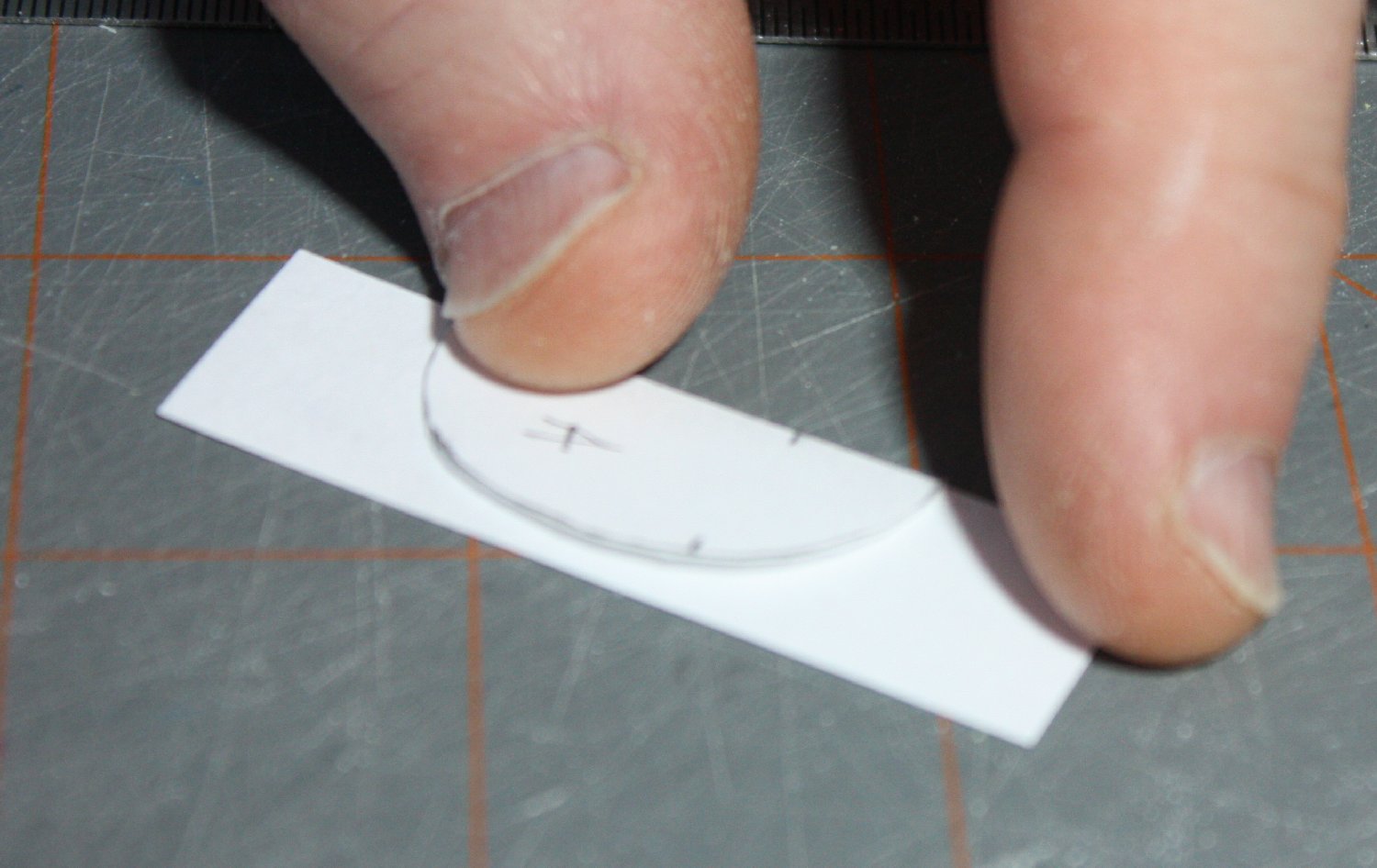
For symmetrical bulkheads typical of fuselages, a ‘center-line (C/L) reference’ should be included on the pattern.  For fuselages divided vertically, this would be a vertical line that represents the parting plane of the two halves.  To make the pattern symmetrical, make the pattern for one half, then fold it over at the C/L to ‘trace’ out the other half of the bulkhead.  Lightly scoring the paper on the center line will make the fold precise.  Once cut out, the bulkhead profile should be checked against the shell to ensure a good fit before committing to the sheet plastic.
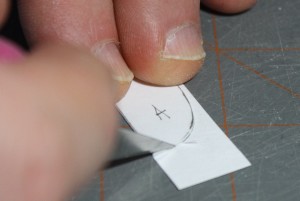
Cutting profile of other side using original side as the template
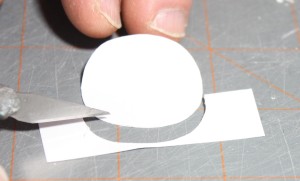
Cutting profile of other side

Resulting full pattern is symmetrical

Resulting full pattern is symmetrical

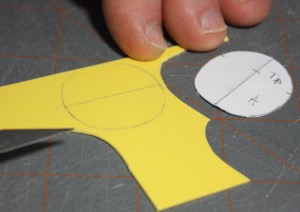
Once the template is finished, then simply trace the shape onto the bulkhead material using a knife or engraving tool, or even a needle in a pin vise.  Make sure to include marks to precisely transfer the center line so when the bulkhead is fitted, the it can be aligned with the edges of the fuselage half to achieve proper vertical alignment.
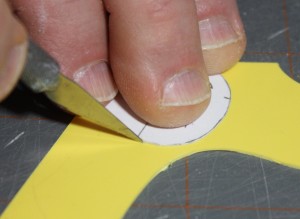
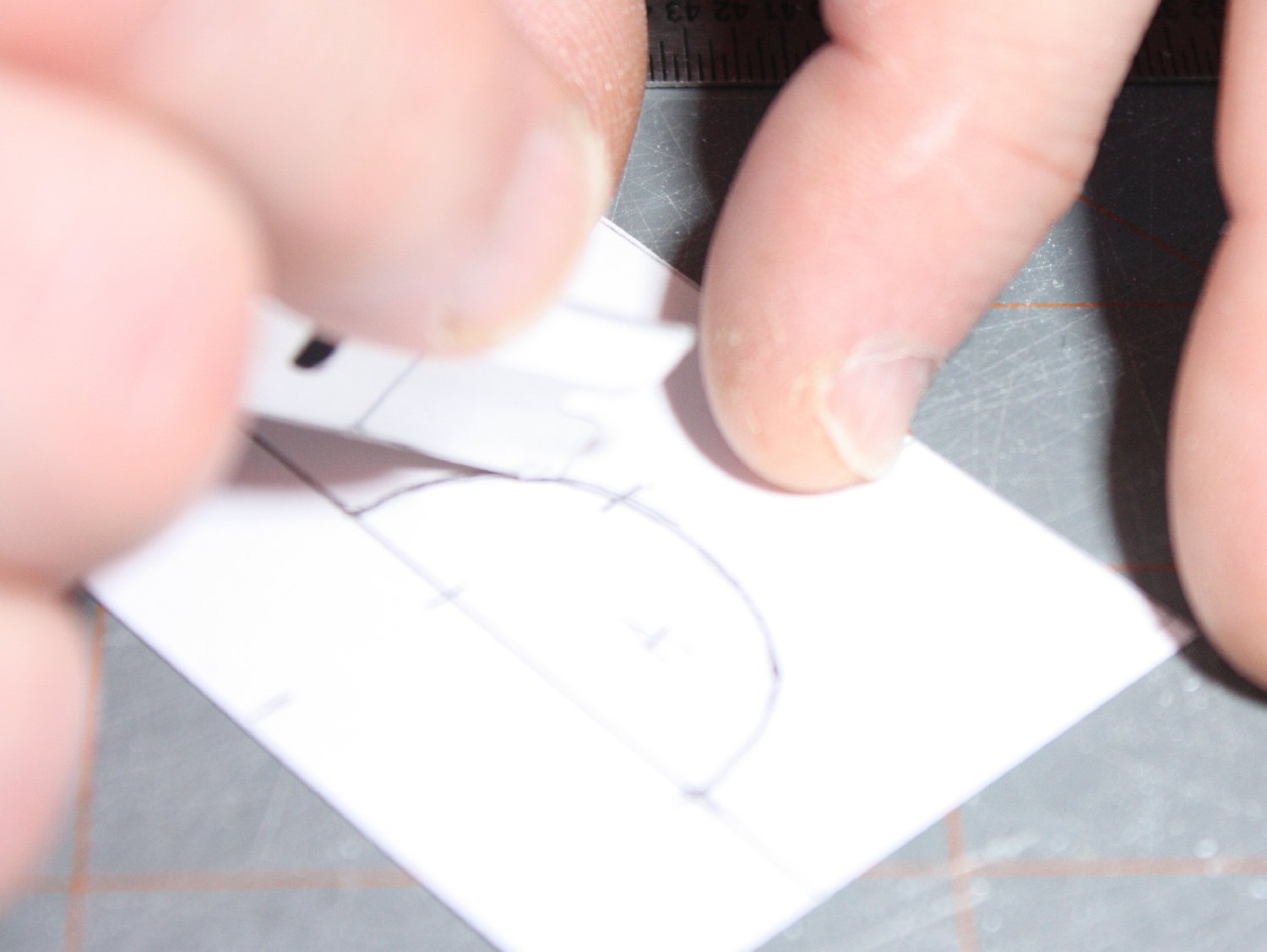
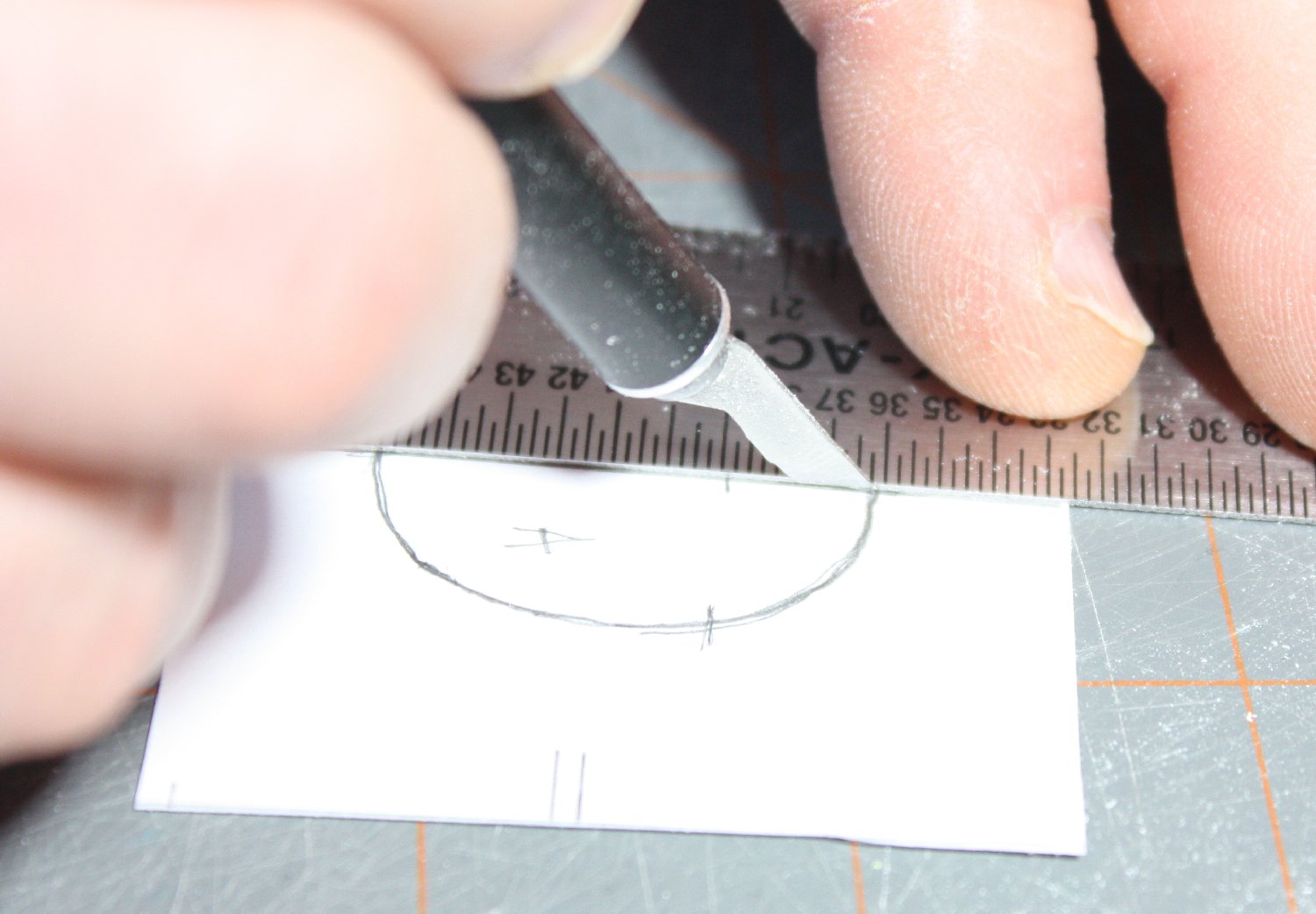
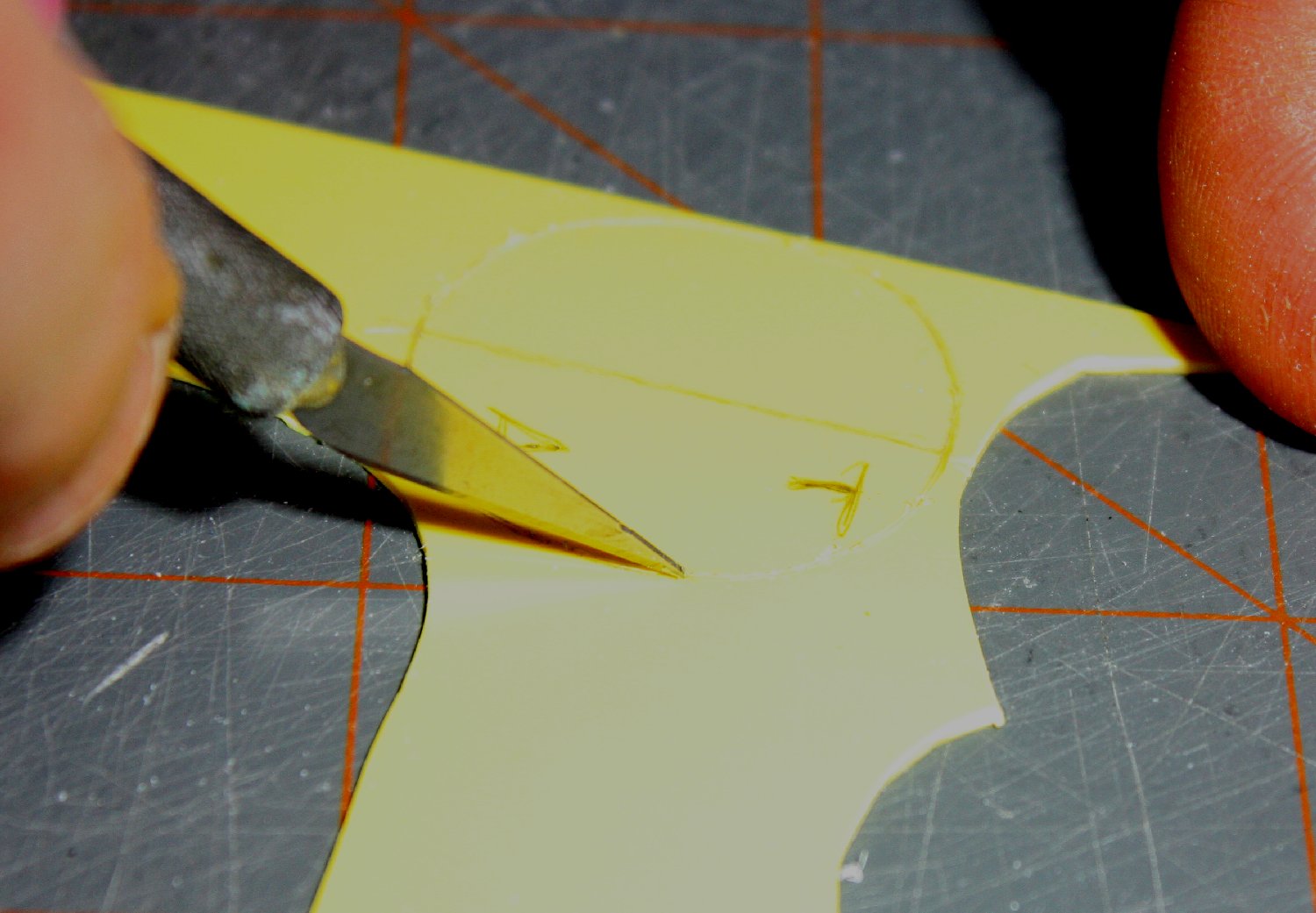
Scoring around paper template making sure there is no shift while cutting
Scoring around paper template making sure there is no shift while cutting

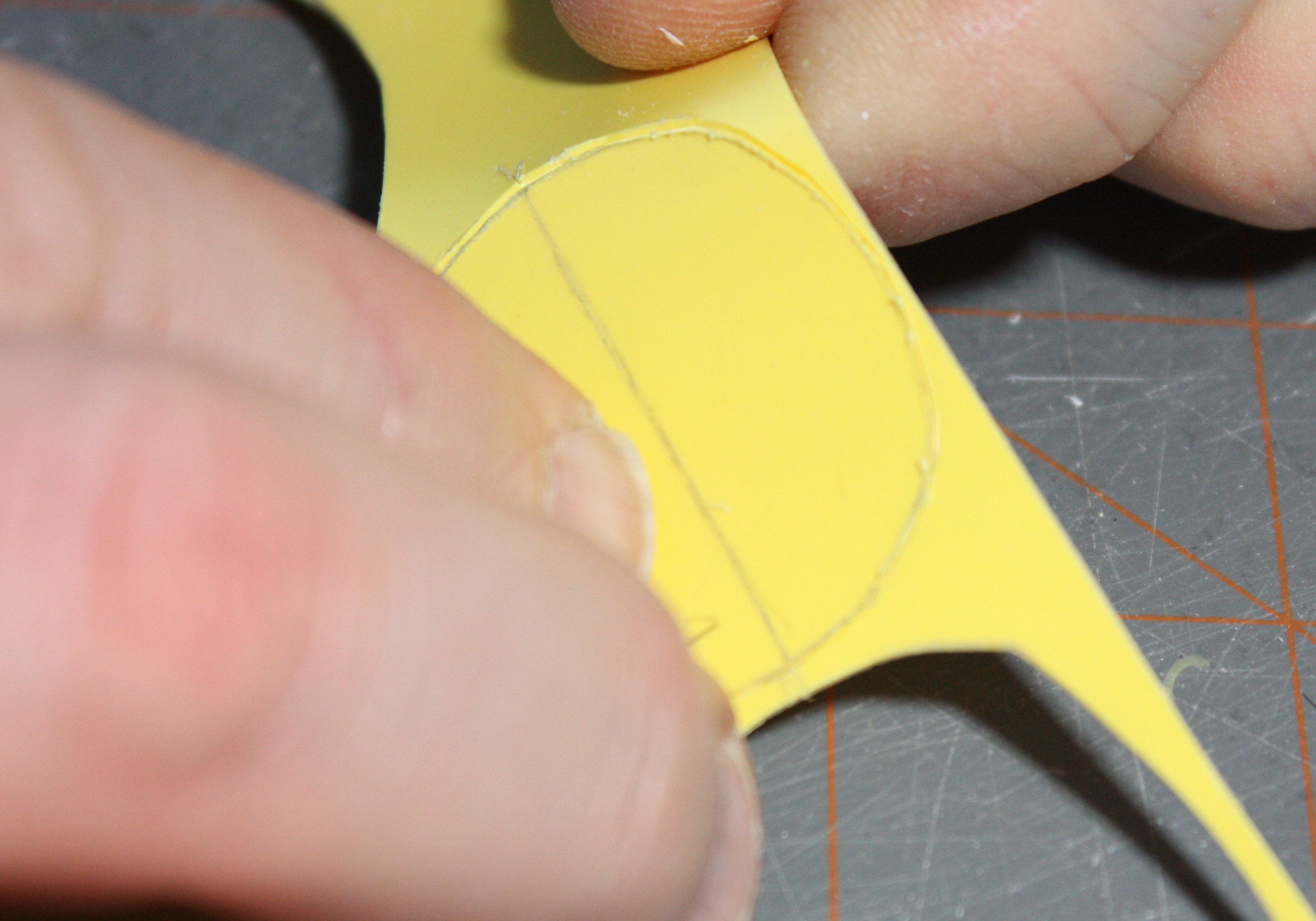
Scored marks are highlighted for visibility

Scored marks are highlighted for visibility

The bulkhead then is usually glued into one half first, using the other half as a brace while the bond cures.  Just clamp the halves together with the bulkhead in place, taking care to keep it ‘square’ in all axes while closing (this requires three hands.)

Once the bulkheads are set and the halves separated, consideration must be given to how actual gluing of the final assembly will be achieved.  Since access to the interior may be restricted & bulkheads may obstruct others, use of a thicker, slow setting cement such as tube glue or epoxy adhesive may be needed.

Scored marks are highlighted for visibility
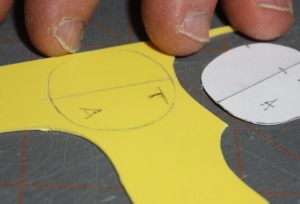
Scored marks are highlighted for visibility

Top of bulkhead & placement 'code' applied

Top of bulkhead & placement ‘code’ applied

Sometimes openings for windows, wheel wells or cockpits may offer access for application of liquid cement.  Being imaginative helps solve the problem but sometimes all that is needed is to first prime the joint areas with liquid cement and then apply LC (quickly) at the top & bottom points just before closing the halves completely then turning it on its side so it can run “down” to the mid point will be sufficient.
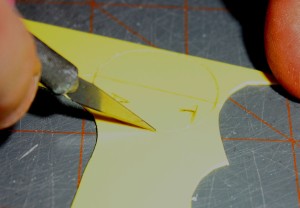
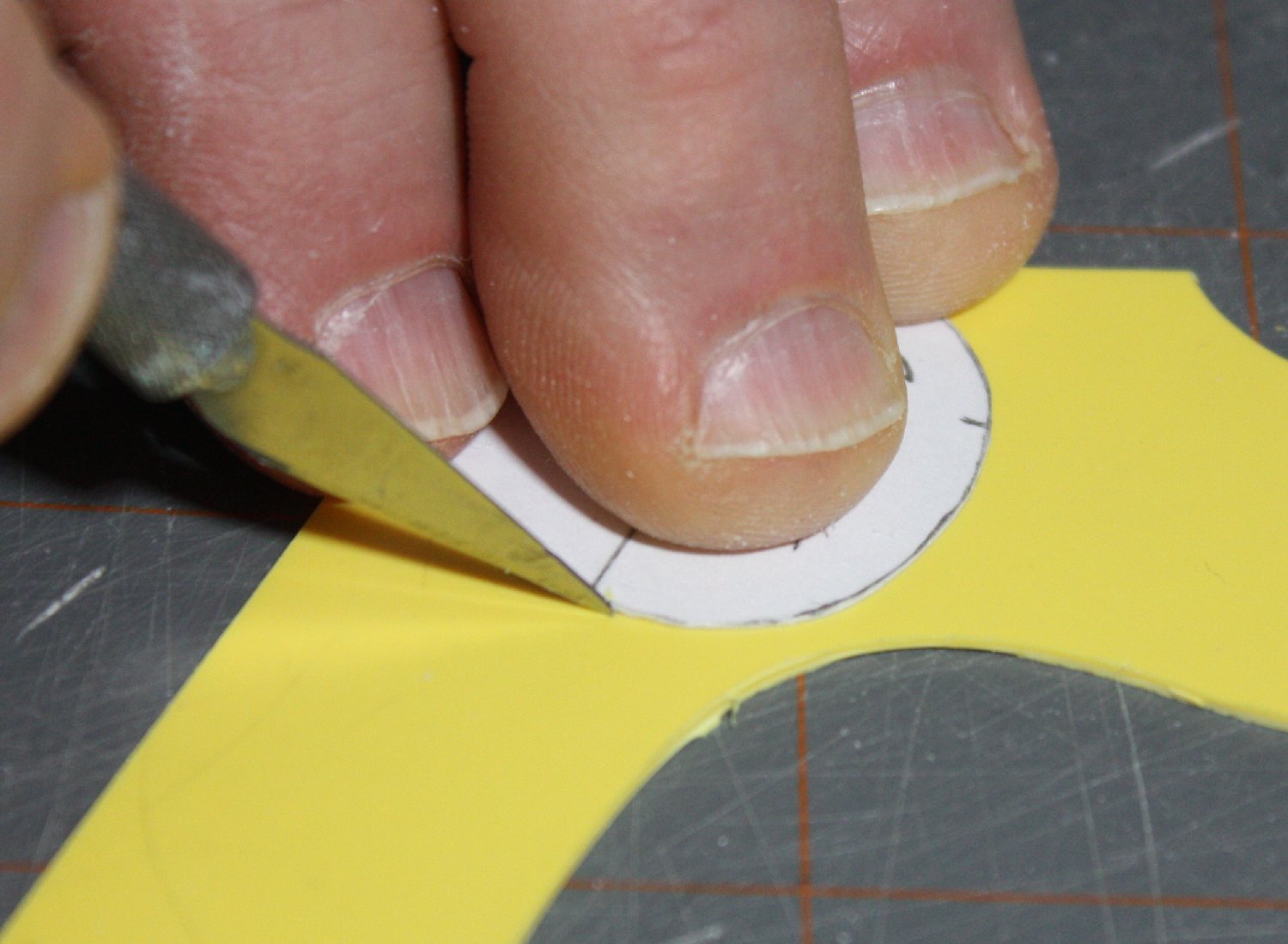
Carefully cutting by repeatedly scoring around the shape
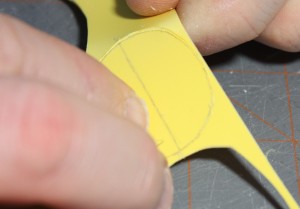
Carefully cutting by repeatedly scoring around the shape

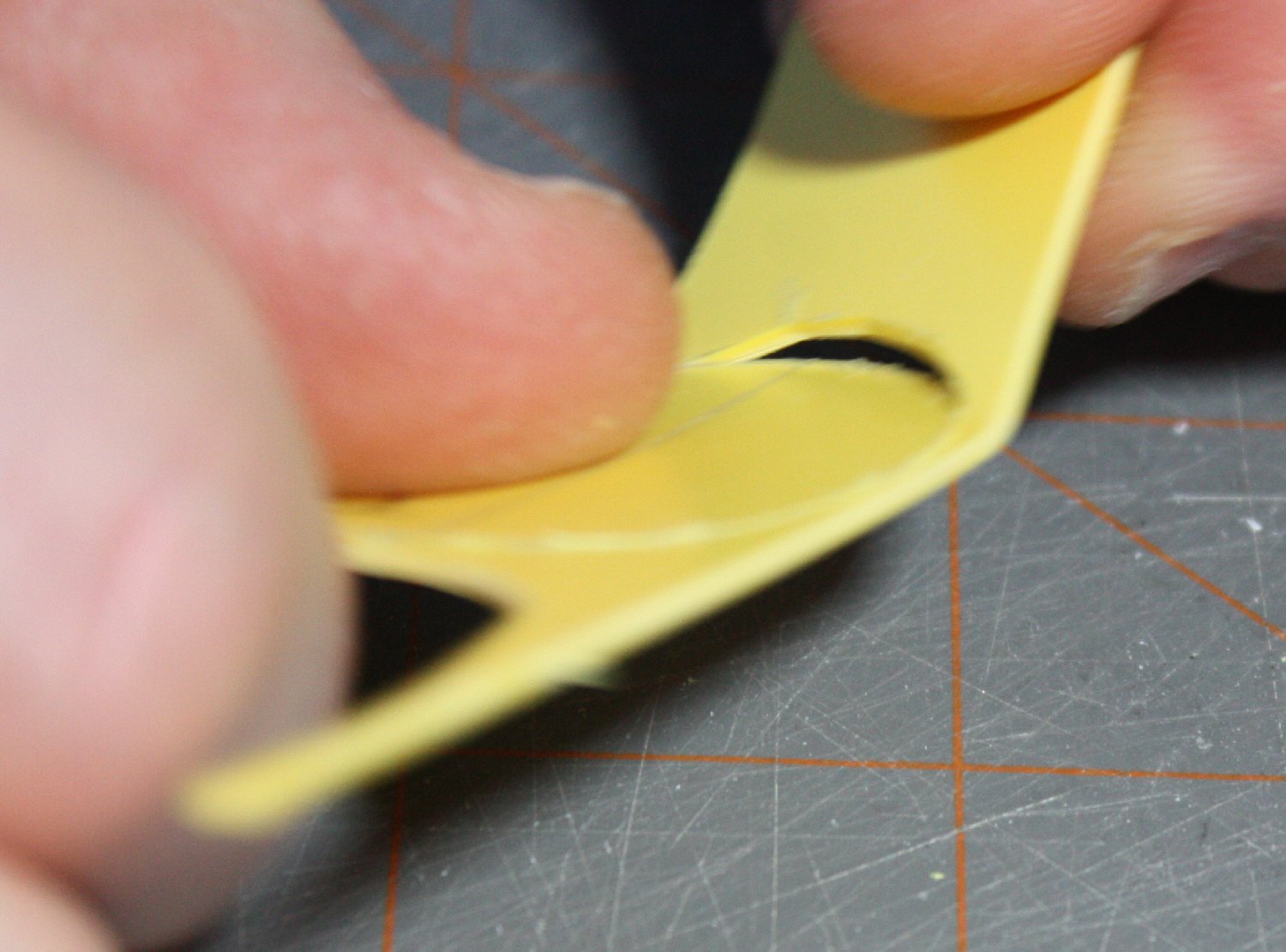
Flexing the score line to break the bulkhead free

Flexing the score line to break the bulkhead free

A prime consideration when using volatile cements in ‘closed spaces’ is that the glue may  distort the plastic at the joints because the glue has no way to “vent” from the interior.  This is especially an issue for thin walled vac parts & big assemblies using relatively large volumes of cement .  Normally, this avoided by 1) allowing plenty of time for the first gluing to cure before full assembly, and 2) making sure any solid bulkheads have openings cut in them to allow airflow to the interior.
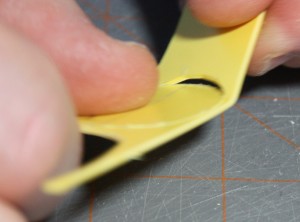
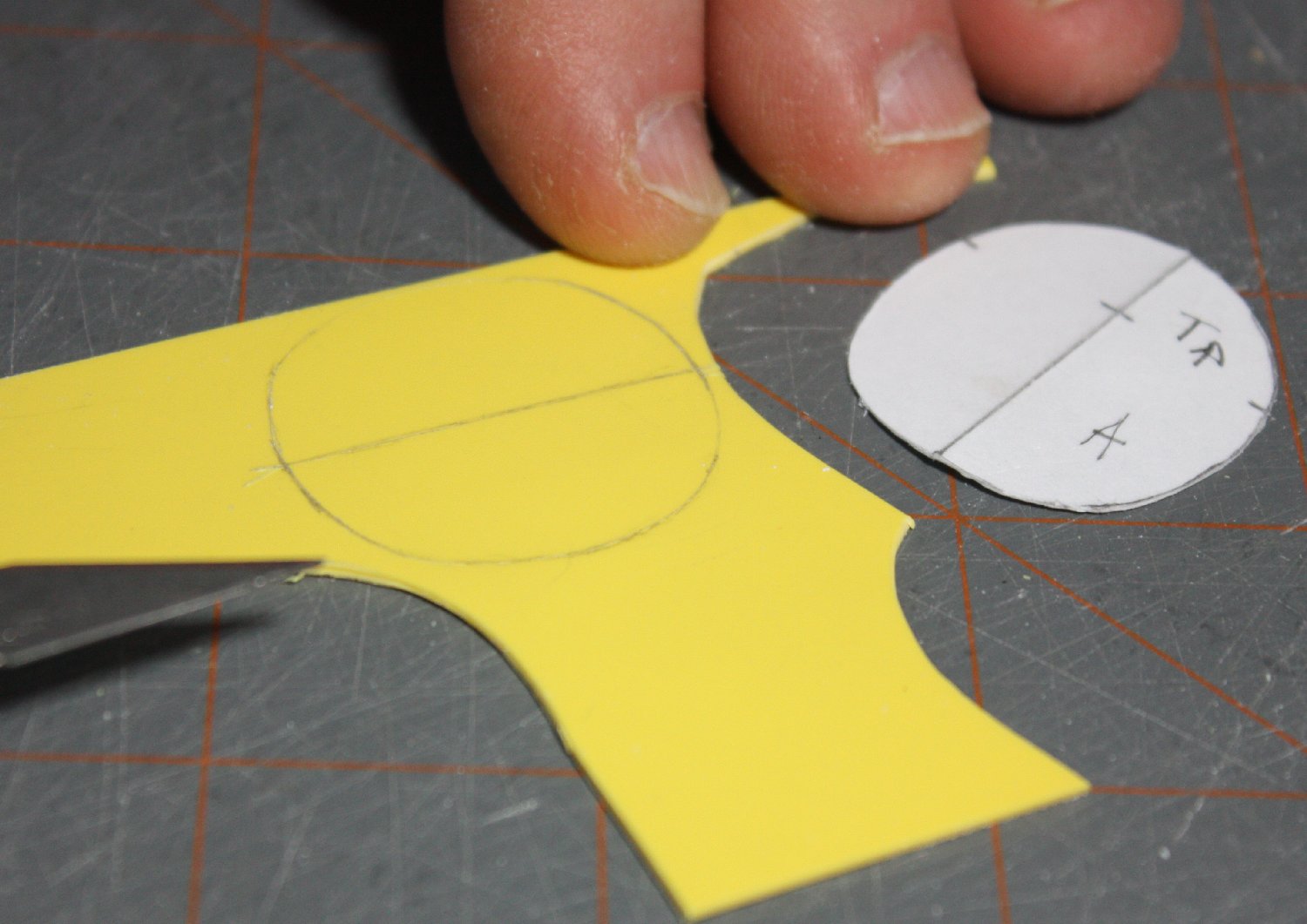
A bit more cutting to help and the score begins to 'snap'

A bit more cutting to help & score begins to ‘snap’
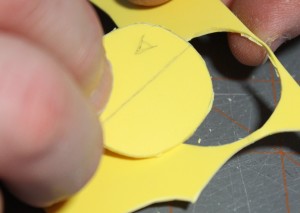
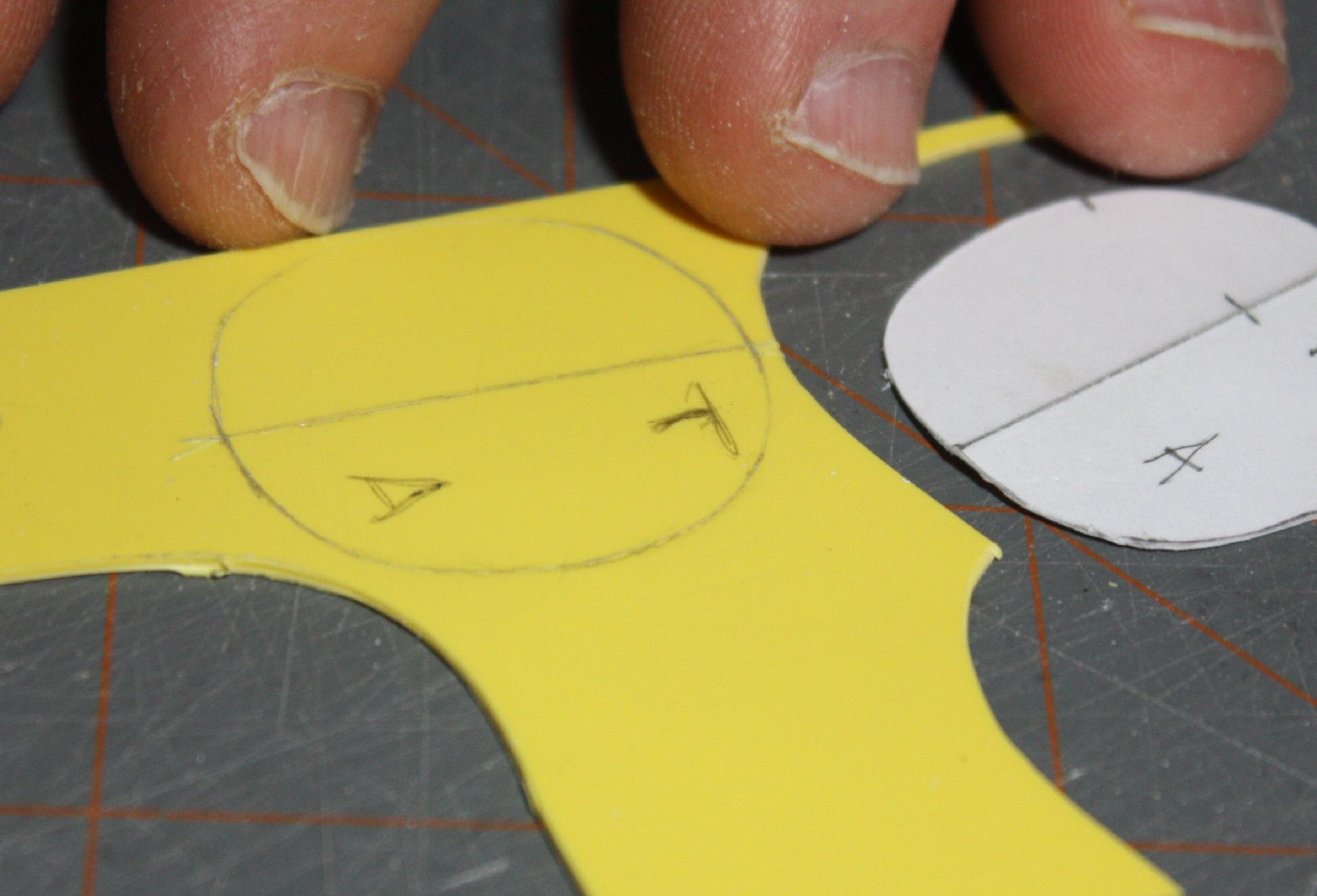
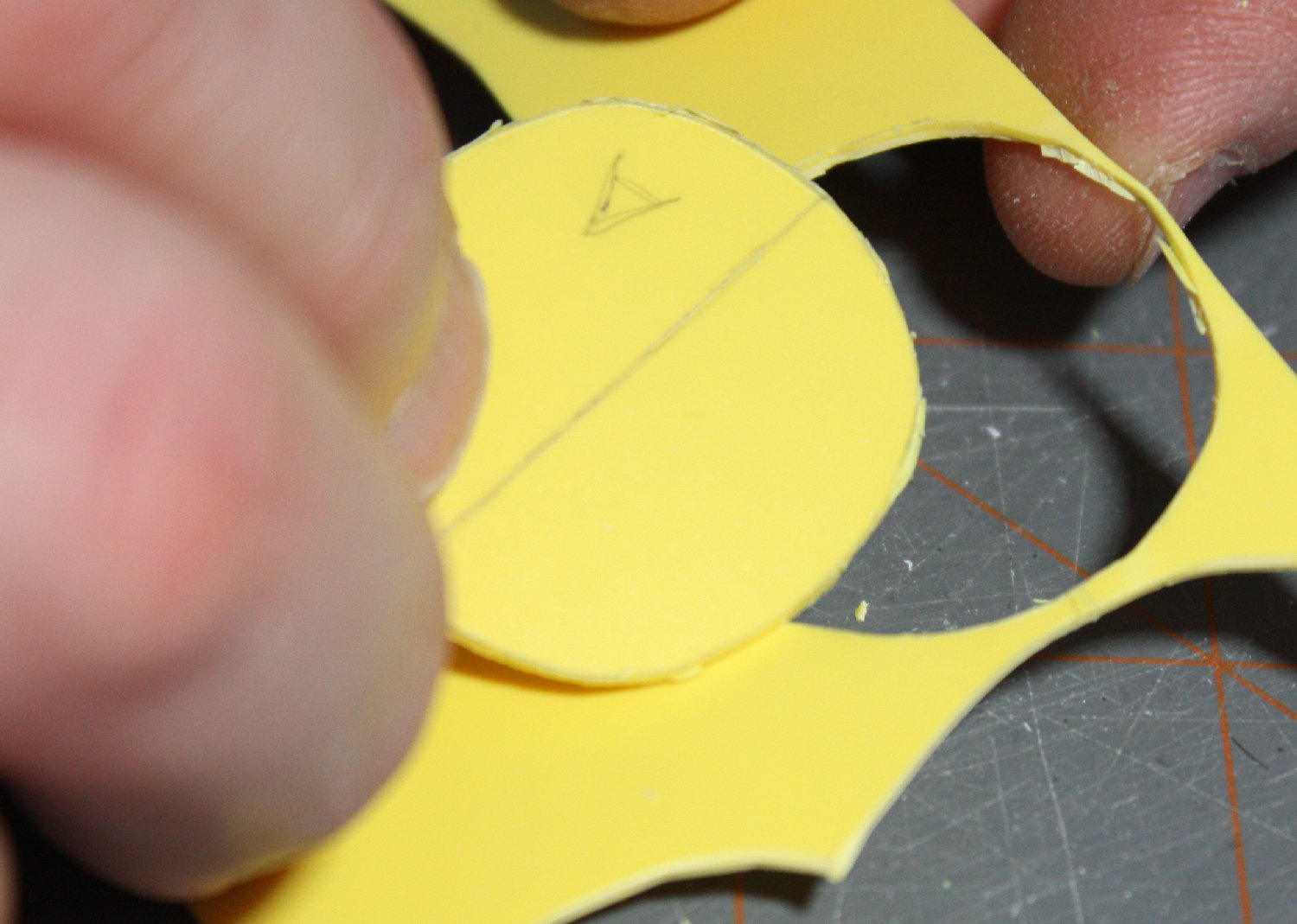
Part removed!

Part removed!

An added advantage is a lighter assembly – helpful when balancing a ‘tail sitter’.  Having a small fan blowing on the parts while curing can both help avoid this problem and speed the cure.

Avoiding haste and working as precisely as possible will go far in getting the most from adding internal structural elements to your models – vacuform or not!
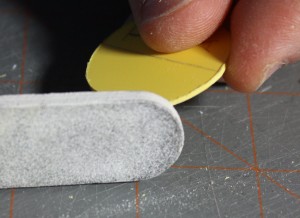
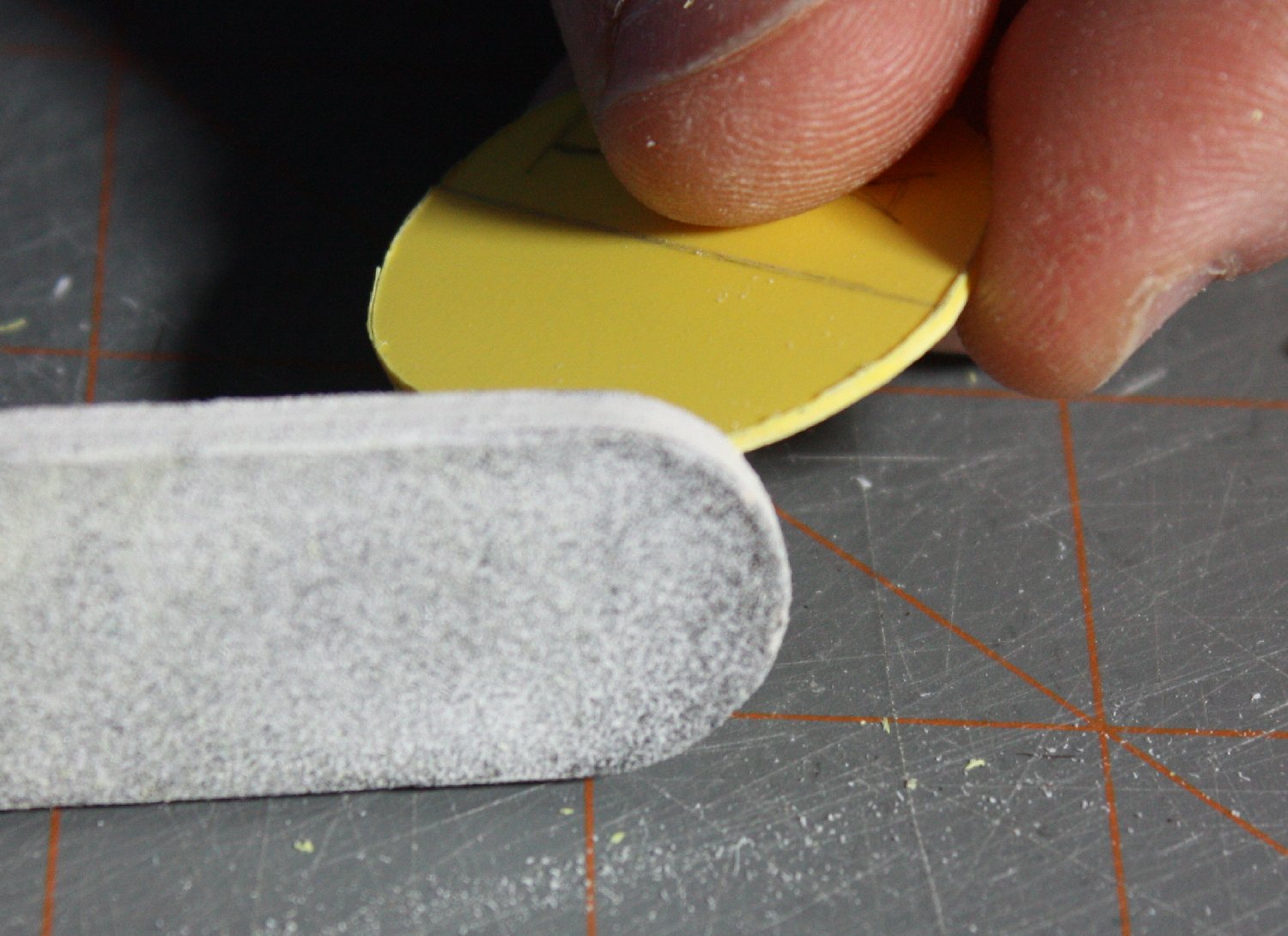
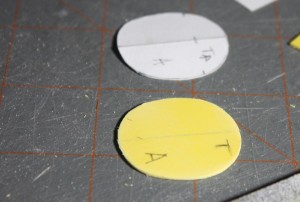
Careful sanding to clean-up the bulkhead
Careful sanding to clean-up the bulkhead

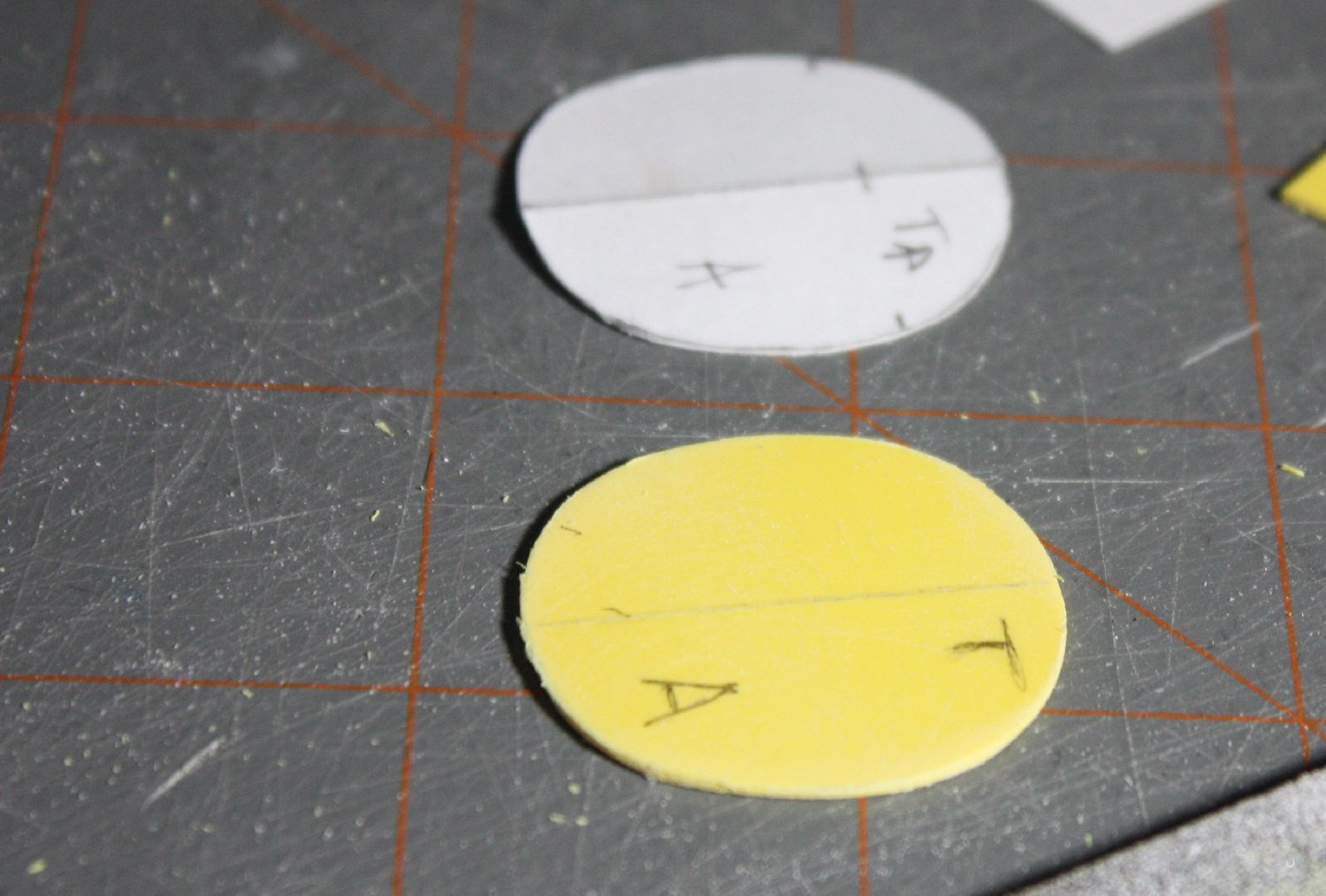
Final result.  Paper template can be reused / tweaked as needed.
Final result. Paper template can be reused / tweaked as needed.

< Go to Part 4
Go to Part 6 (soon to come!)>
Bomb bay roof flanked by bulkheads; note marking for later bulkhead cut-out.

Bomb bay roof flanked by bulkheads; note marking for later bulkhead cut-out.

Posted in Modeling | Tagged ,
Gallery

2014 June Show & Tell
avatar

This gallery contains 32 photos.

Here are a selection of photos from our July show-and-tell:

Posted in Member Gallery | Tagged ,
Gallery

2014 Virginia International Tattoo
avatar

This gallery contains 40 photos.

On Thursday afternoon, April 24, 2014, Mr. Robert Beach, of the Hampton Roads Scale Modelers Club help me transport the exhibit elements from my house to Scope Arena in downtown Norfolk.  I proceeded to set up the exhibit that afternoon … Full Article→

Posted in Member Gallery | Tagged , ,
Gallery

SH-2F Walkaround c. 1988
avatar

This gallery contains 43 photos.

This gallery is a collection of images I took while serving with the US Navy’s premier SH-2 squadron, HSL-34 (Green Checkers.)  It was one of our line aircraft plus a few taken of a static display aircraft at an airshow … Full Article→

Posted in Walkaround | Tagged , ,
Gallery

2014 Old Dominion Open Show Report
avatar

This gallery contains 177 photos.

Remarkable! The IPMS/Richmond guys are consistently getting better each year in putting on their annual ODO model show & contest. It helps that the Richmond Raceway facilities have been nicely updated with better lighting and new accommodations but even with … Full Article→

Posted in Member Gallery | Tagged , , | Leave a comment
Gallery

HH-2D Seasprite Helicopter Walkaround
avatar

This gallery contains 238 photos.

This set of images provides a detailed walkaround of the the HH-2D airframe held at the American Helicopter Museum in West Chester, Pennsylvania.  Many of the images include a ruler for sizing purposes with multiple views & closeups, useful as … Full Article→

Posted in Walkaround | Tagged , , | 5 Comments

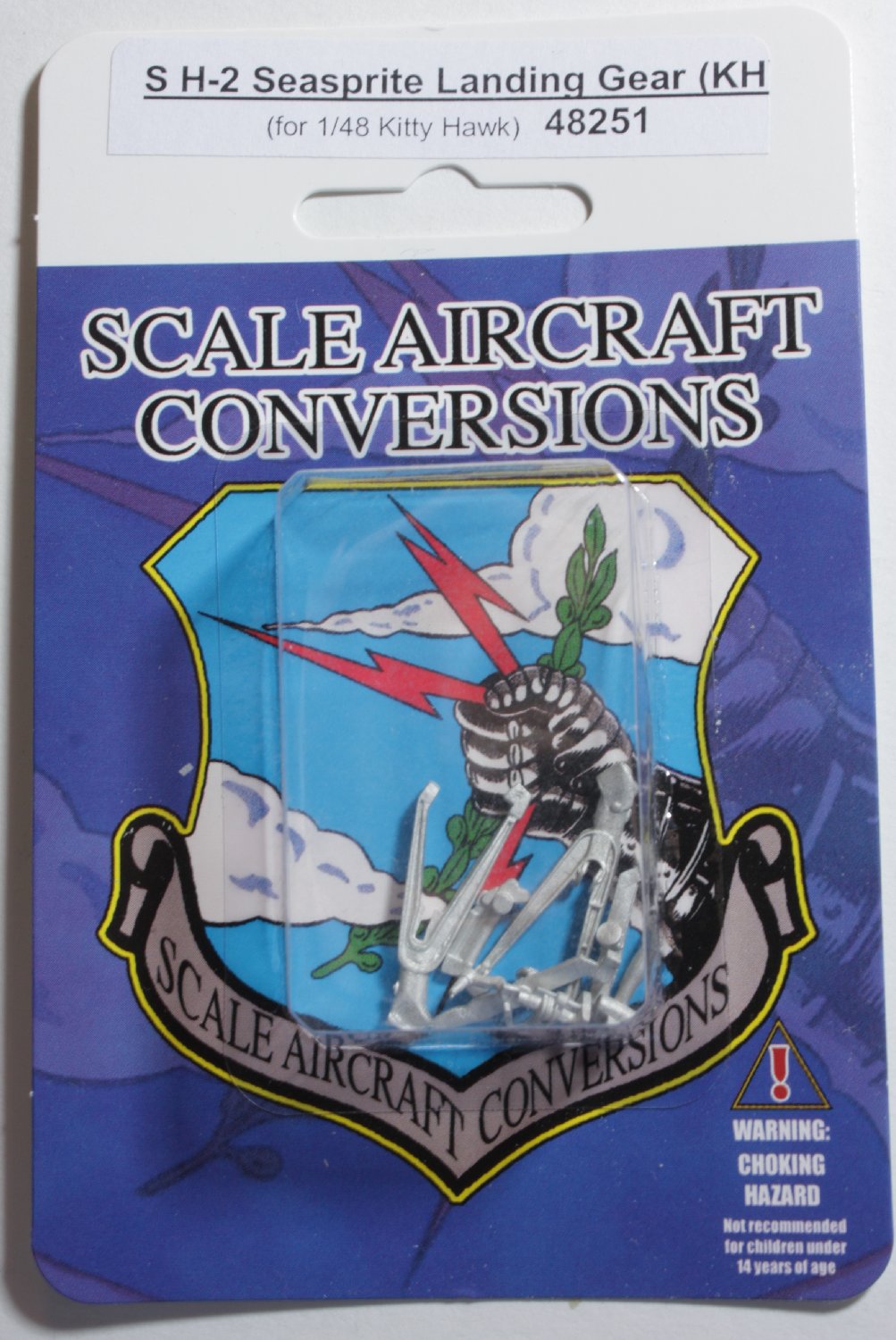
SH-2F Landing Gear set from Scale Aircraft Conversions
avatar

Metal parts upgrade for the 1:48 Kitty Hawk kit

Sometimes we get into a mindset and forget that we’re (usually!) talking with actual people on the “other end” of things.

Case in point is when I recently offered my Seasprite reference material to the folks at Scale Aircraft Conversions (SAC) to help with a replacement gear for the Kitty Hawk kit that I assumed they’d be working on shortly.  I used the ‘contact’ info on their website and before too long, Ross from SAC came back to let me know thanks, but they had already created the tooling for the kit using – as they often do – the original kit parts as masters.

SAC package

Scale Aircraft Conversion’s typical packaging

After just a bit more ‘chat’ about my original desire to work up a landing gear upgrade for the old Matchbox SH-2F kit, Ross offered me a copy of the new set to see if it might work as well.  I thought this was pretty cool of him and so have agreed to post my findings here as a way to share with other ‘Hookie-Twok’ fans still wanting to use the kits in their stashes.

port overview

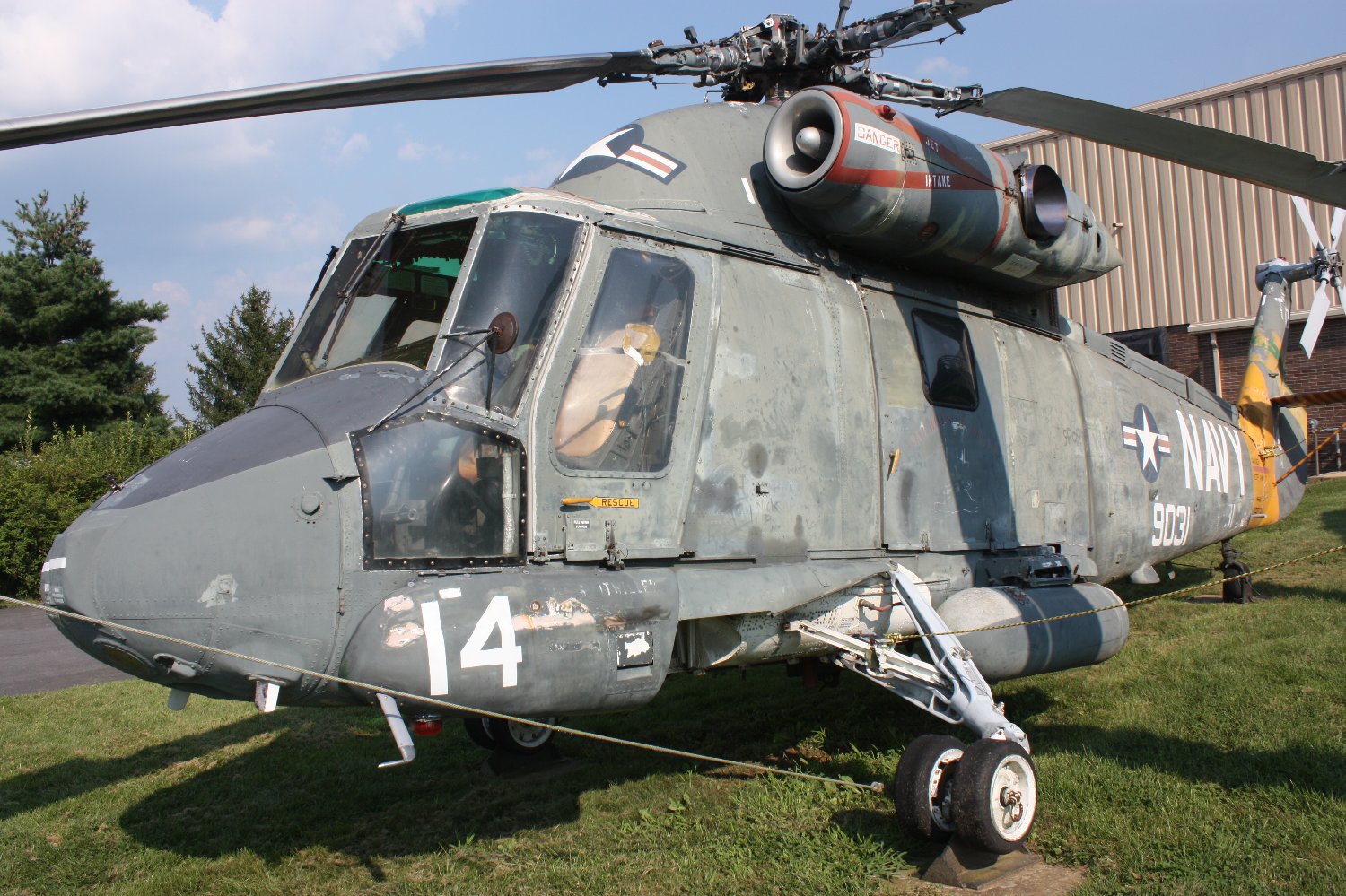
Overall view of the HH-2D held at the American Helicopter Museum in West Chester, PA.

MB_box

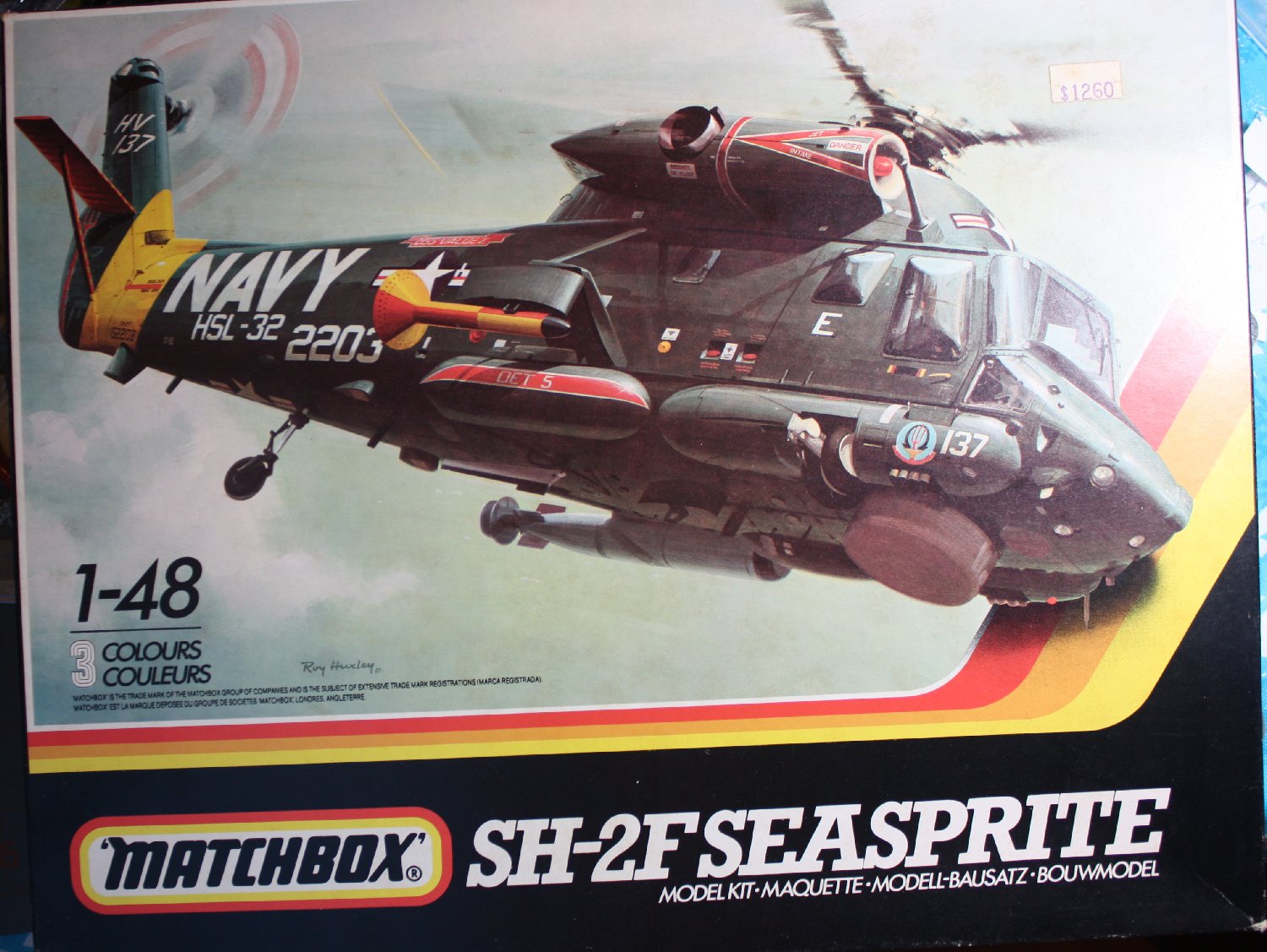
Matchbox kit in original release (note price tag!) Since reissued by Revell Gmbh.

parts closeup

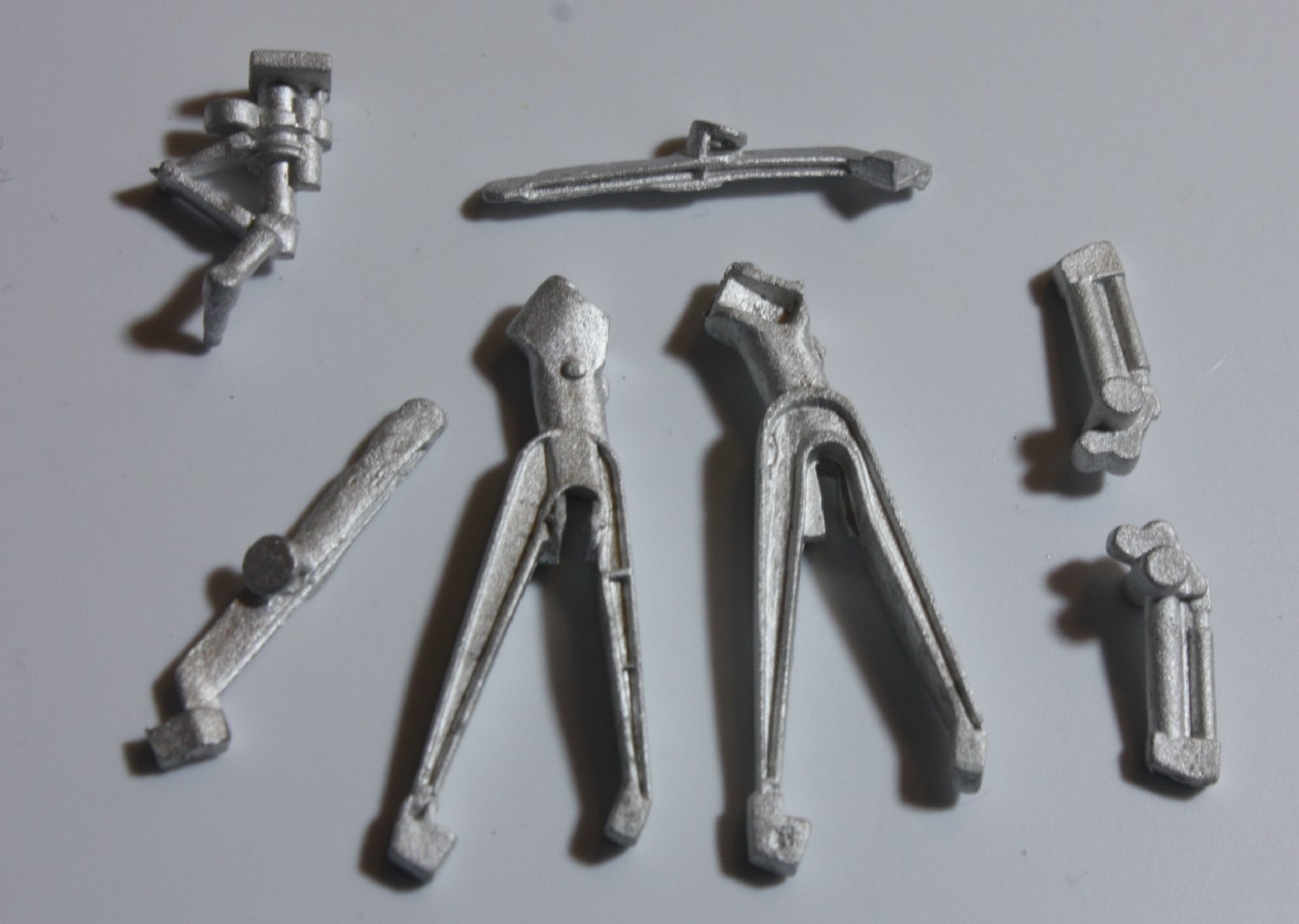
Parts closeup showing basic accuracy of the Kitty Hawk parts

As promised, an envelope arrived in a few days and  I dug out the Matchbox (MB) kit (one of four!) to assess if the SAC gear (AKA the Kitty Hawk parts) could work to replace the admittedly basic MB parts.  The metal parts came in SAC’s standard card & bubble packaging which allows the parts to rattle about inside – though with no damage even after a trip through the USPS.  Basically the parts don’t have enough mass to create enough momentum to be a problem anyway.


First, a basic assessment of the KT/SAC parts.  The set includes seven pewter copies of the Kitty Hawk main & tail landing strut parts (no wheels) and so should fit the KH kit just fine (at least, as well as the originals…)  As for accuracy, KH has done a credible job representing the SH-2’s main & tail wheel landing gear struts.  This is broken down into three parts per side: the main “Y” gear leg, the retraction strut and the compression arm assembly.  The real thing relies on a short but highly charged hydraulic strut atop the ‘swing arm’ between the “Y” leg and the dual-wheel axle to absorb the landing loads.  The kit parts have the swing arm and strut molded as one piece that is glued into an irregularly- shaped, over-sized socket at the lower end of the “Y” leg (which is a pivot point on the prototype.)

strbd main gear strut dims 2

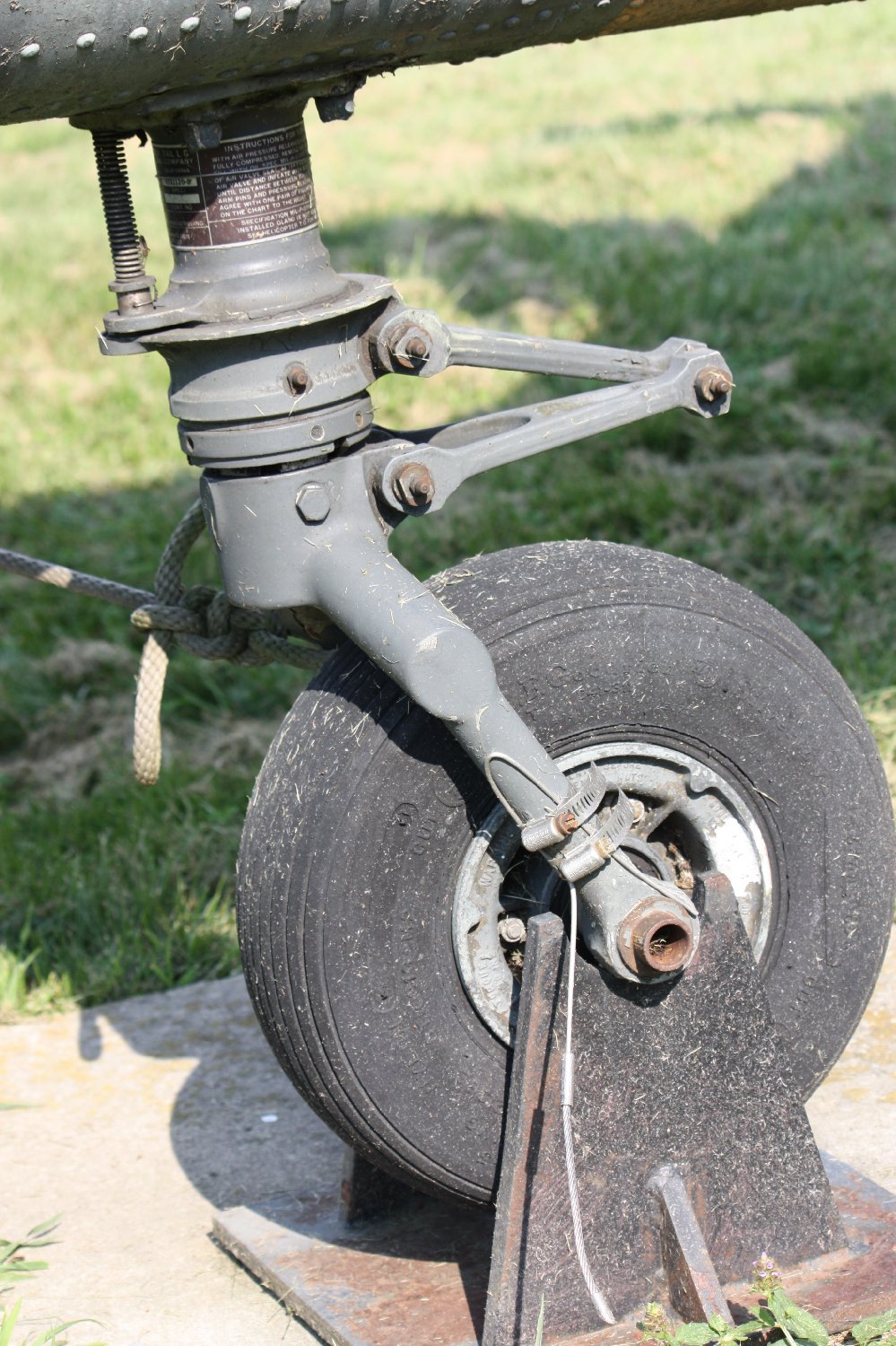
Starboard landing gear showing the configuration of the real thing.

One note: the circular footstep mid way up the retraction strut should have a center hole drilled in it.  The gear doesn’t have any of the tiny plumbing & wiring molded on it, but that is easy enough to add (check the SH-2F & HH-2D galleries Here.)

It should be understood this is a fairly complex geometry requiring care to get a proper ‘sit’ to the model.  Not only is the landing gear not directly under the model, it has a ‘splay’ angle nearly perpendicular to the vertical center plane.  Then it has a near 90 deg angle for the wheel mounting at the end of leg that creates a sizable torque moment concentrated right in elbow.  Overall, I’d not be surprised if the plastic landing gear suffers ‘sag’ & breakage over time.  A metal gear is almost required!

Given the tough job presented by this geometry, if I had engineered these replacement  parts, I would have made the “Y” leg and compression arm assembly all one piece to 1) incorporate the correct angles and 2) reinforce the point of highest stress.  The only advantage to keeping the original plastic part layout is to allow for a prototypical adjustment in compression angle to simulate higher load weights (such as torpedo, full sonobouy rack and large auxiliary full tank…)

To correct for this design weakness in the Kitty Hawk parts, a bit of ‘drill & pin’ and gluing with epoxy could be used.  Drilling on the elbow pivot line and inserting a brass rod ‘pin’ will also look more prototypical.  Using epoxy glue is recommended as I’m not sure CA cement would hold up over time though the joint avoids direct ‘shear’ force.

compare main gear

Now, how about using the SAC set with the Matchbox kit?  Well, as flimsy as it is, the MB gear is basically of the correct configuration in spite of it’s crude representation.  The MB parts include the landing gear fairing doors which were apparently abandoned fairly early in the ‘Foxtrots’ career though still applicable to earlier versions.

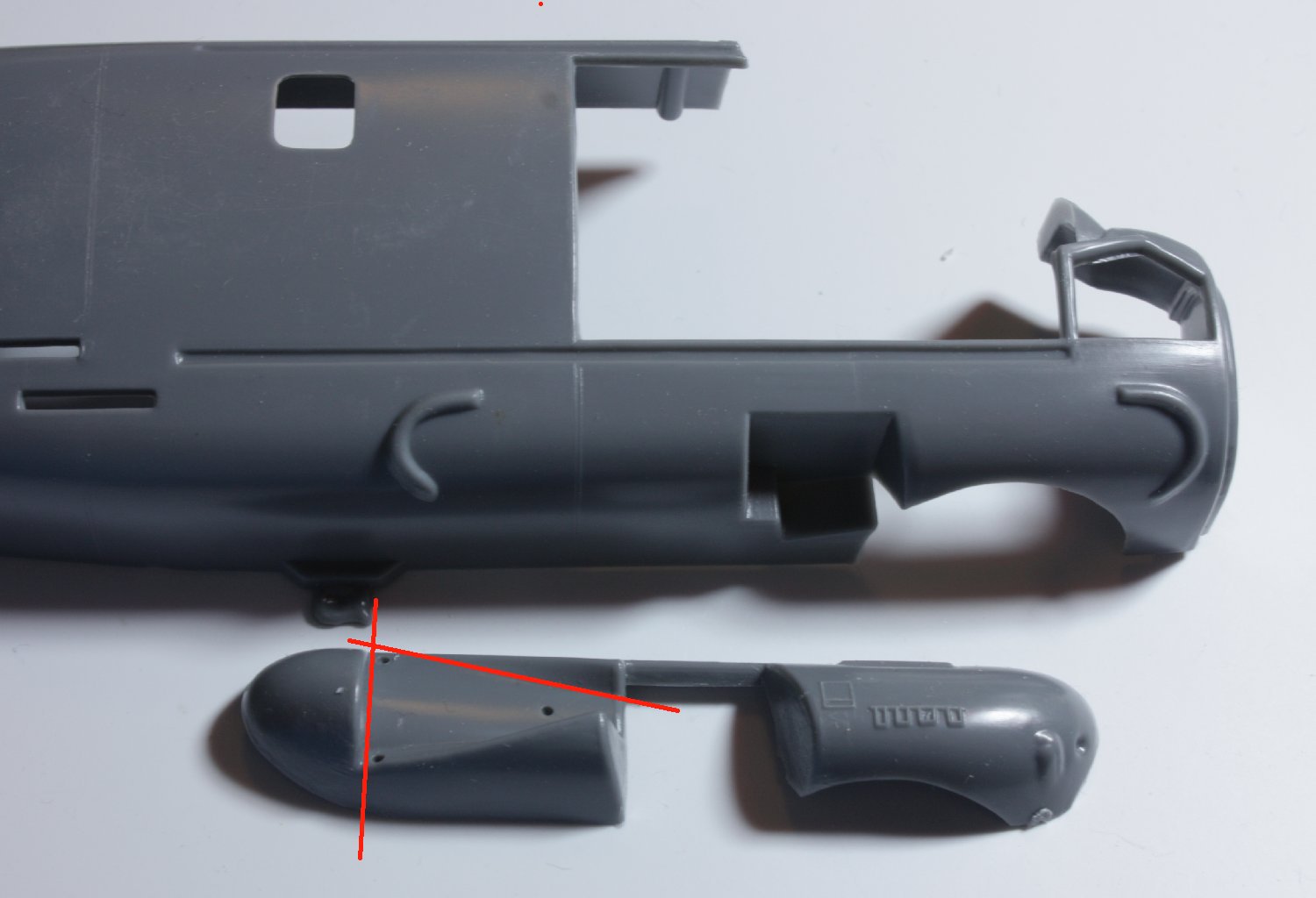
MB_fuse parts

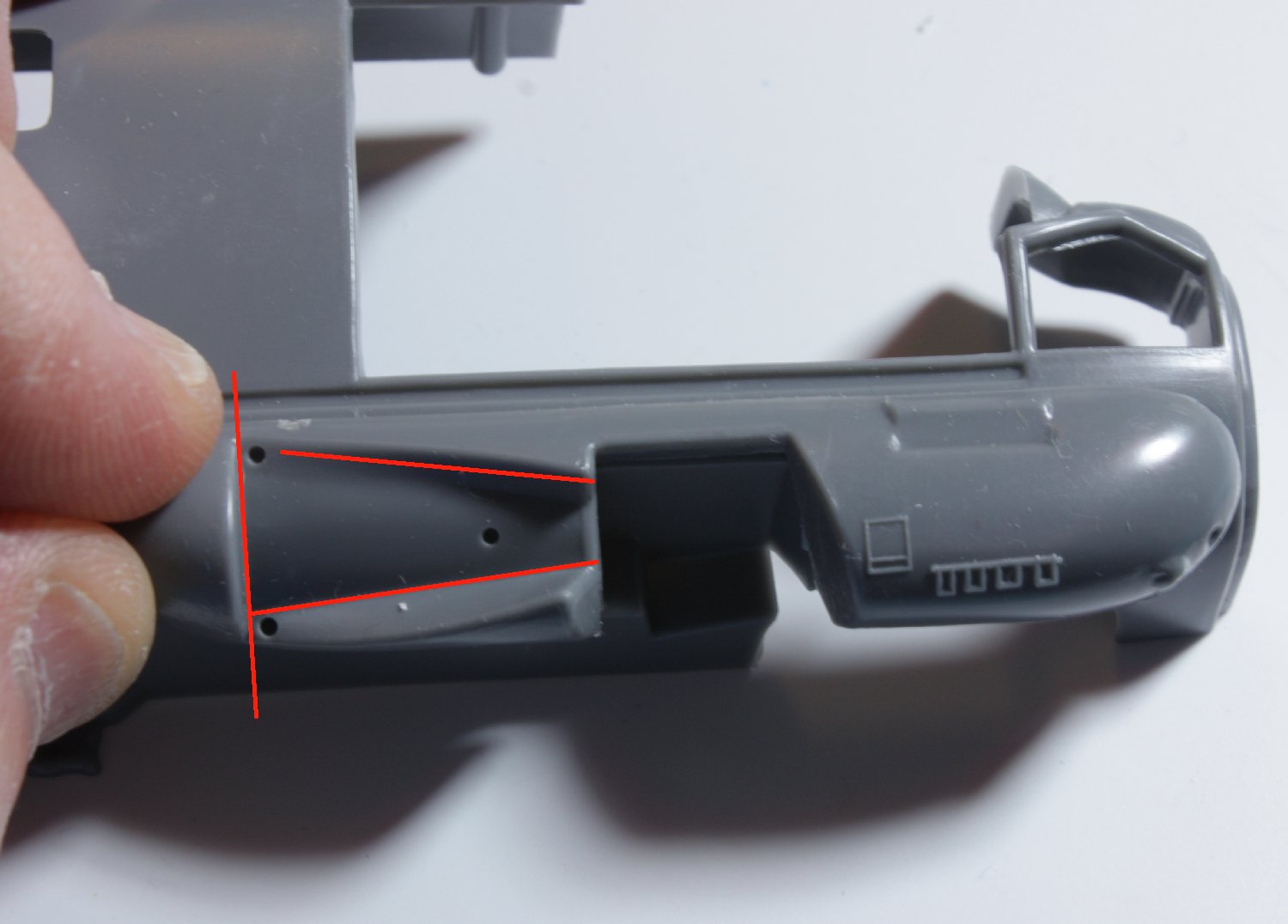
Note the extraneous ‘web’ of the landing gear fairing part. The red lines represent the ‘cut lines’ to modify the part to be more prototypical.

Also, the gear fairing ‘canoe’ part has a ‘web’ to reinforce what would have been a pretty “floppy” part otherwise.  However, the aft part of the fairing and the web should be removed to allow mounting of the landing gear leg directly to the fuselage surface.  Using the SAC gear, small rectangular holes would have to be

MB gear fairing test fit

Little test fit of the fairing; compare to reference images to see how the fairing was modified over the life of the airframe. The kit parts could be used “as is” to do a conversion to an earlier, single-engine version.

accurately cut into the fuselage to accept the gear mounting blocks.  Fortunately, the gear is symmetrical (unlike so much on the H-2) to the center line, so a ‘flip’ placement template (made from card stock or thin sheet metal) referenced to the center line, would work perfectly.  The MB & KH geometry are in good ‘agreement’, with any extra length making up for the removed ‘fairing web’ – which a test fit confirms.

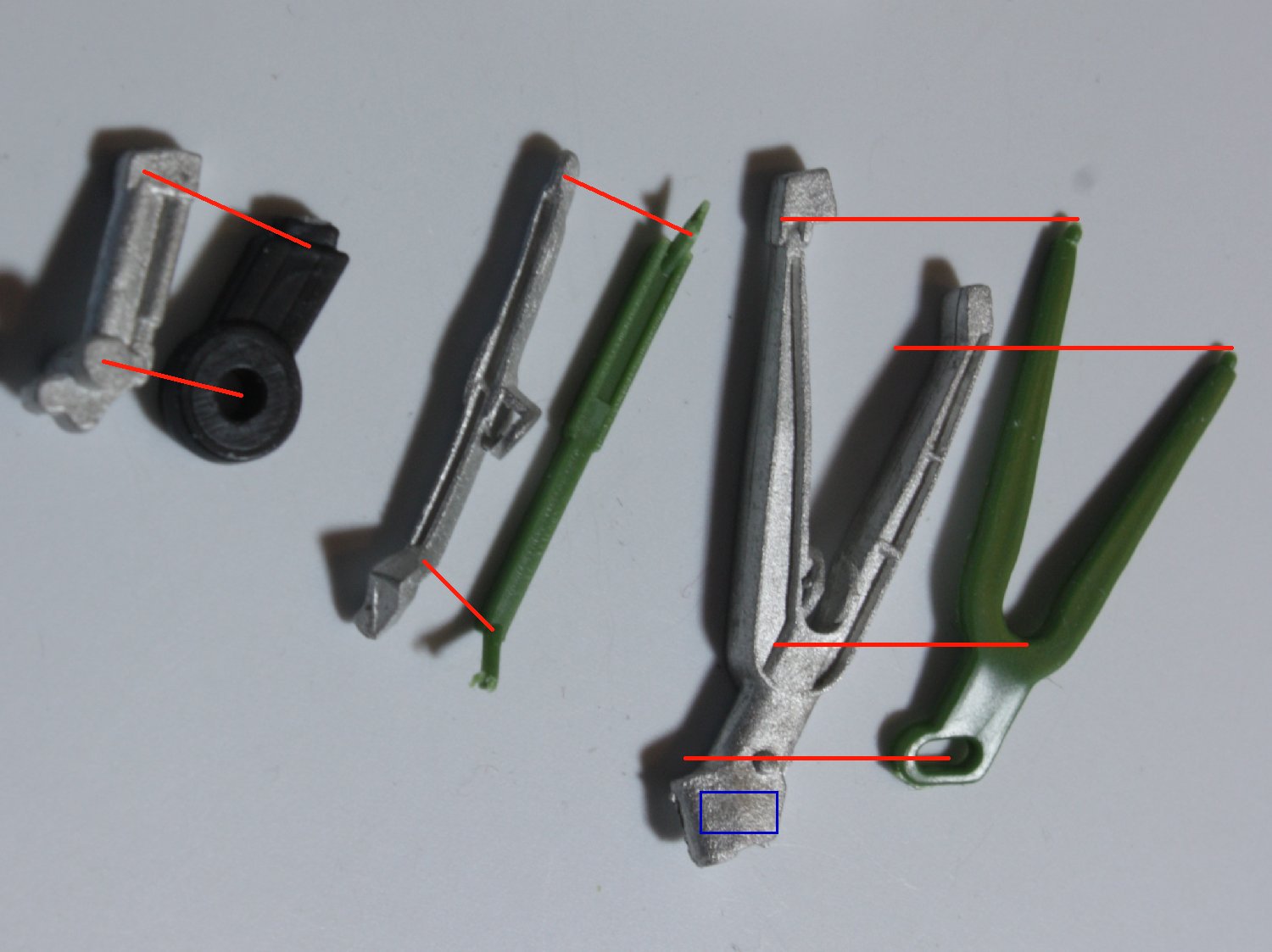
compare tail gear parts

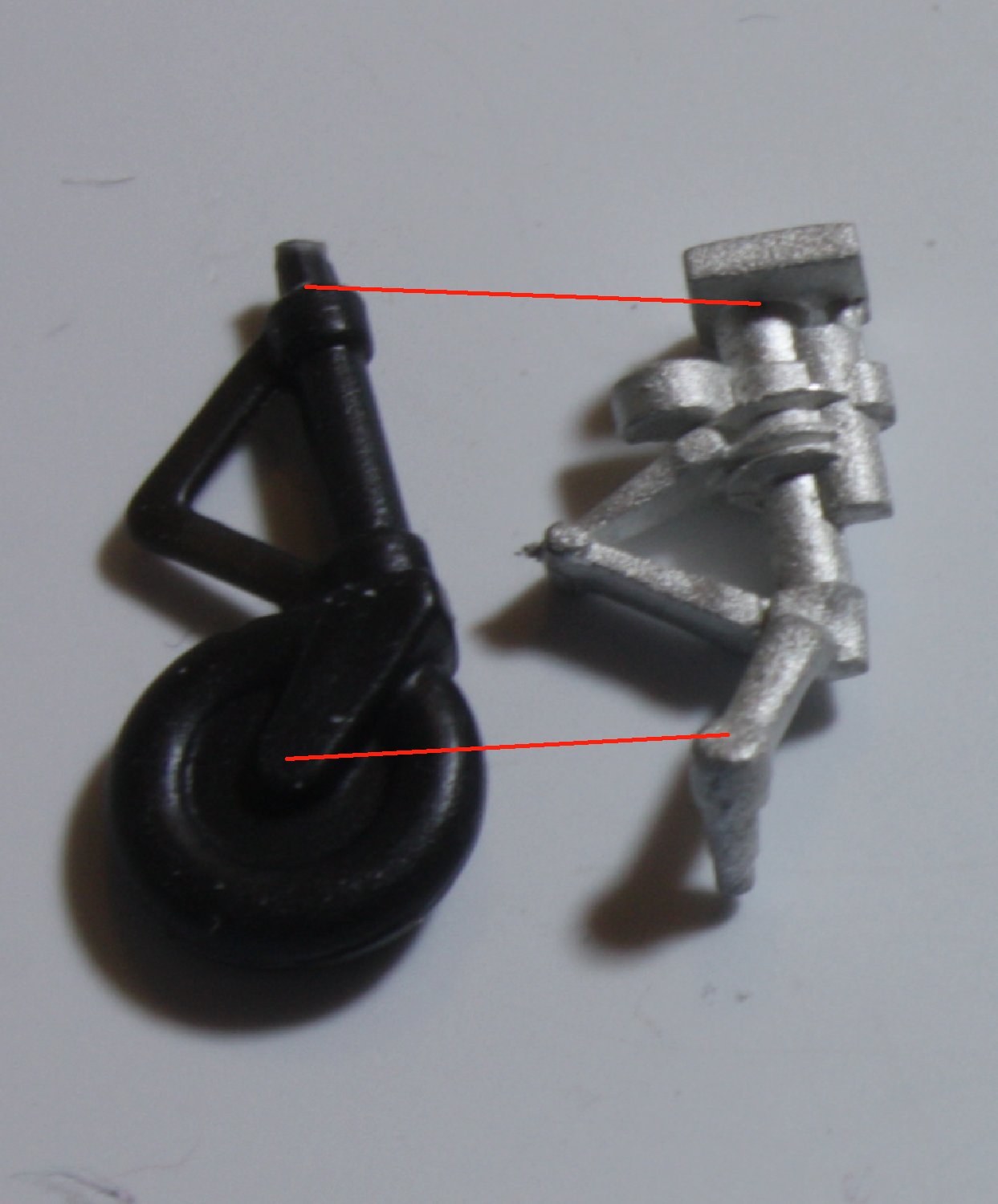
Tail wheel struts comparison. The SAC part is better detailed but the set lacks a tail wheel so the Matchbox part would have to modified to ‘recover’ the wheel.

Even the tail wheel struts very closely share the same height, though a wheel would either come from the parts box or through careful removal & cleanup of the MB wheel.

tail wheel n strut frm portside

Real deal – note the strut is not pressurized on this HH-2D museum ‘bird’.

In short, the SAC set *can* be used to upgrade & detail the MB kit with a little prep work.  A little bit more effort to drill & pin the ‘elbow’ joints will improve the gear’s durability beyond even the basic strength of the pewter parts which are needed to support the weight of this model.

Posted in Reviews | Tagged , , , | Leave a comment
Gallery

SH-2F Seasprite Helicopter
avatar

This gallery contains 258 photos.

This series of images is of the SH-2F airframe (BuNo. 149026) being used as a ‘gate guard’ at NAS Norfolk, Virginia.  Most were taken in 2013 though the more ‘colorful’ paint scheme was from a couple of years earlier.  Keep … Full Article→
Posted in Walkaround | Tagged | 4 Comments